LED Backlight Failure
The TV powers on and may still produce sound, but the screen remains extremely dark or goes black shortly after startup. Failed or degraded LED backlight strips are a frequently reported hardware cause.

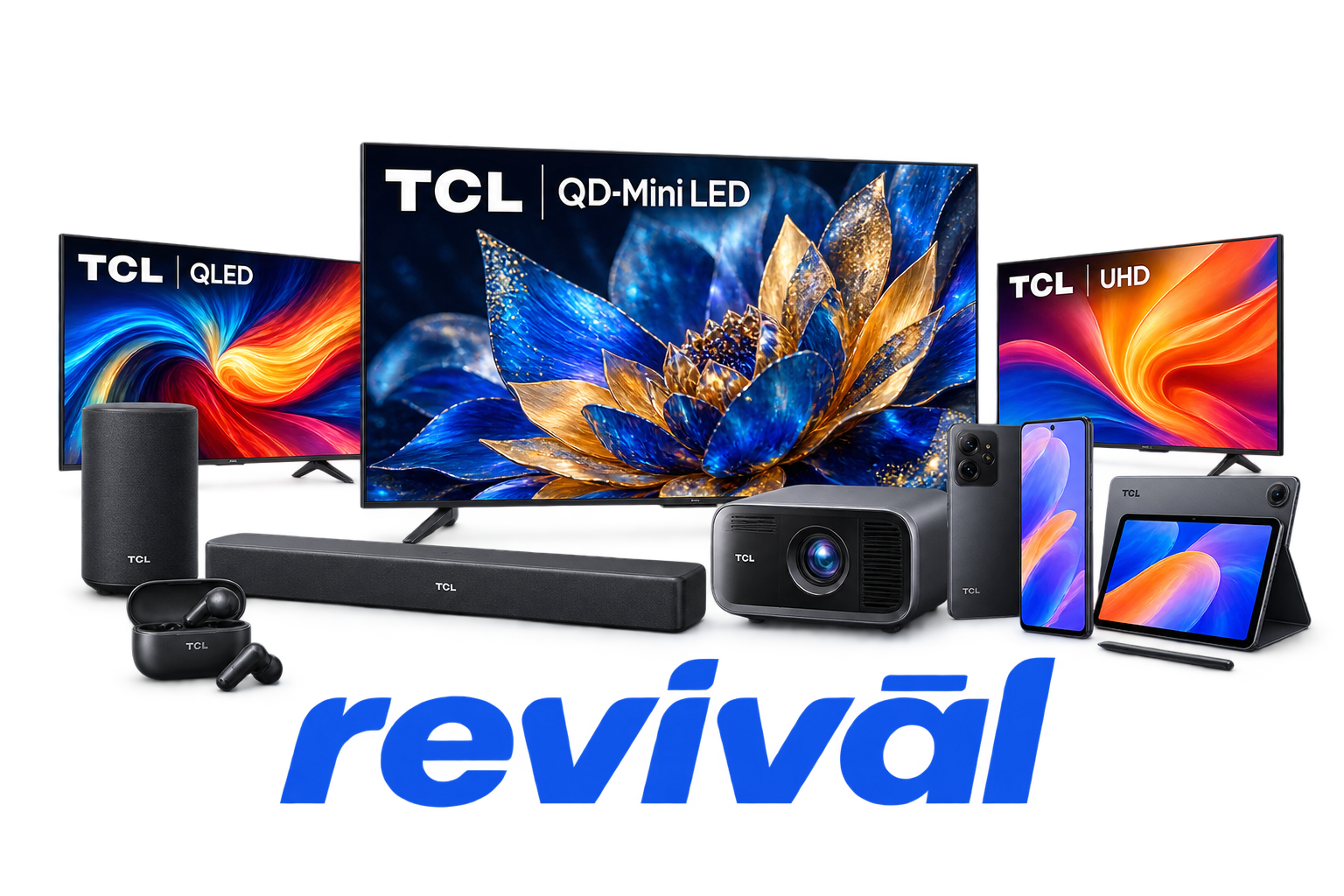
Acme Revival is an independent repair network that operates separately from the manufacturers whose devices we service. Our independence enables a repair model that exists beyond manufacturer-controlled strategies, while preserving the ability to work with manufacturers where appropriate.
TCL Electronics is a major global consumer-electronics OEM and branded device manufacturer best known for televisions and large-screen smart displays. Its core business encompasses the R&D, manufacturing, distribution, and sale of smart TVs, particularly large-format and premium Mini LED models, while its broader product portfolio includes monitors, smart-home products, mobile/connected devices, and other intelligent consumer hardware. TCL operates a geographically diversified TV production network spanning China, Vietnam, Mexico, Brazil, Poland, and Pakistan, with total annual capacity exceeding 30 million sets. The company is particularly known for its scale in televisions: TCL reported that its branded TV shipments ranked No. 2 globally in 2025, while its Mini LED TV shipments ranked first globally. It combines its own branded-device business with OEM/ODM manufacturing capabilities and benefits from the broader TCL ecosystem's vertically integrated display technology and supply chain.
The TV powers on and may still produce sound, but the screen remains extremely dark or goes black shortly after startup. Failed or degraded LED backlight strips are a frequently reported hardware cause.
Vertical or horizontal lines, permanently distorted sections, half-screen images, colored bands, or a completely unusable picture can result from failure within the LCD panel. Panel failures generally require replacement of the complete display assembly.
The television will not power on, shuts down unexpectedly, repeatedly attempts to start, or shows no standby light despite receiving AC power. Failed power-supply components can prevent the main board and backlight circuitry from receiving the required voltages.
The TV may fail to boot, remain stuck during startup, reboot repeatedly, lose video or audio functions, or become completely unresponsive. Failure of processors, regulators, storage components, or other circuitry on the main board can produce several apparently unrelated symptoms.
The television powers on and its backlight operates, but the picture displays vertical lines, abnormal colors, duplicated images, half-screen output, or severe distortion. A defective timing-control circuit or its associated connections can interrupt communication between the main board and LCD panel.
One or more HDMI inputs intermittently lose picture or sound, fail to recognize connected equipment, or repeatedly drop the HDMI handshake. The problem can originate from damaged connectors, interface circuitry, or associated main-board hardware.
The TV repeatedly disconnects from Wi-Fi, cannot detect networks, or fails to connect even when other devices operate normally on the same network. Persistent problems after software and network troubleshooting can indicate failure of the TV's wireless module or related main-board circuitry.
The television displays a normal picture but produces no sound, intermittent sound, distortion, buzzing, or audio from only one side. When settings and external connections are ruled out, the fault can involve the internal speakers, amplifier circuitry, or main board.
Individual pixels or small groups of pixels remain permanently dark, bright, or fixed at a particular color across different inputs and content. Persistent defects visible on the TV's own menus typically originate within the LCD panel rather than the connected source.
Connect with a technician.

Orders can typically be cancelled 24 hours prior to shipping
Get a real-time offer. Enter the make and model to begin.
Acme offers several ways to pay your service or repair balance.
Securely powered by 
This service is provided by Community Federal Savings Bank (“CFSB”), member FDIC, for which GoCardless Ltd acts as a third-party servicer.
Payable to ACME REVIVAL INC, write TCL Electronics in memo line, and mail your check to: 191 University Blvd. Suite 340, Denver, CO 80206. Payment are collected every weekday excluding federal holidays.