[No Display / Black Screen]
The teleprompter monitor powers on but produces no usable image. Typical fault areas include the LCD/backlight system, video-input circuitry, signal connection, or internal display electronics.

Acme Revival is an independent repair network that operates separately from the manufacturers whose devices we service. Our independence enables a repair model that exists beyond manufacturer-controlled strategies, while preserving the ability to work with manufacturers where appropriate.
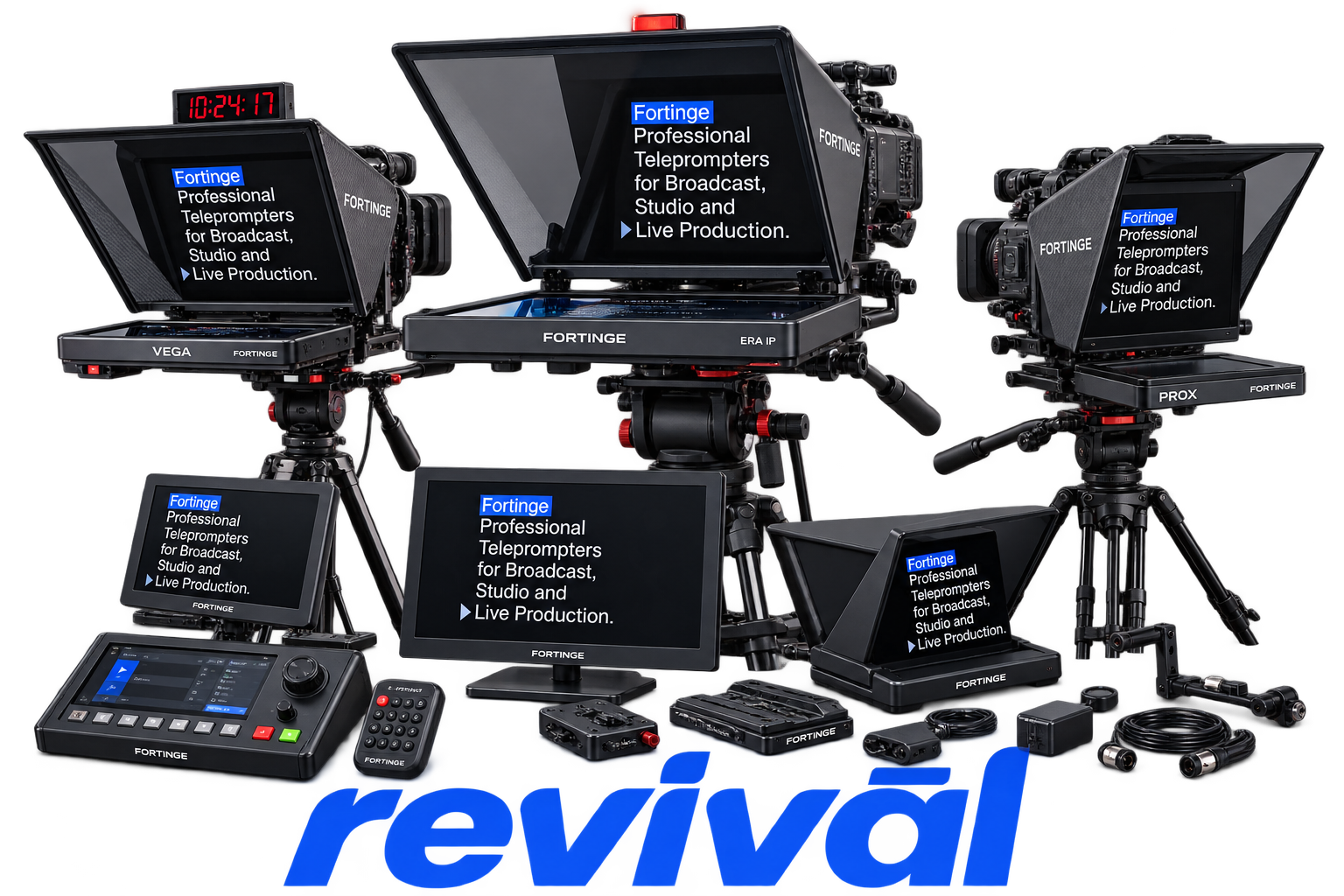
Fortinge is a Turkish professional broadcast and video-equipment OEM operated by Akratek Elektronik. The business began developing its own teleprompters in 2013, moved the ForPrompt teleprompter into mass production in 2014, and subsequently expanded into broadcast monitors, touch displays, prompting and recording/playout software, camera/studio accessories, and lighting. Its teleprompter portfolio ranges from compact phone/tablet systems through conference and professional studio models, including systems designed for ENG, studio, PTZ, SDI, NDI/IP, and newsroom workflows. Fortinge sells internationally, with the company reporting products in use in more than 80 countries, and maintains a European office/service presence in Budapest. It is particularly known for its professional teleprompter systems and integrated prompting software for television studios, broadcasters, presenters, government organizations, educational institutions, and professional content producers.
The teleprompter monitor powers on but produces no usable image. Typical fault areas include the LCD/backlight system, video-input circuitry, signal connection, or internal display electronics.
The monitor fails to recognize or reliably display HDMI, SDI, VGA, or Composite video. The symptom may affect only one input or appear as intermittent signal loss while other inputs continue working.
The unit does not power on, shuts down unexpectedly, or operates intermittently. Likely hardware fault areas include the external power adapter, DC connection, internal power circuitry, or associated cabling.
The LCD remains functional but becomes unusually dim, unevenly illuminated, or loses illumination entirely. This primarily affects the monitor's LED backlight or its driving circuitry and can make reflected teleprompter text unreadable.
The RF100 hand controller loses or cannot establish communication with its R100 receiver, preventing reliable script control. Battery condition, the RF link, receiver hardware, USB connection, or controller electronics can produce this symptom.
A wired hand controller or FC-1 foot controller is not detected or stops responding through USB. The failure can originate in the controller, USB cable/connector, interface electronics, or host connection.
The beam-splitter glass becomes cracked, scratched, loose, or otherwise unable to provide a clean reflected image. Because Fortinge studio systems use dedicated 70/30 glass and stage systems can use 50/50 glass, damage directly degrades readability and camera image quality.
Mechanical mounting, quick-release, elevator, monopod, or adjustment components become loose, damaged, or unable to hold their intended position. This can cause monitor/glass misalignment, unstable camera positioning, or inability to correctly configure the teleprompter.
Models equipped with SDI output stop providing a stable downstream video signal even though the monitor itself may remain operational. The fault can involve the SDI connector, I/O electronics, cabling, or associated signal circuitry.
Connect with a technician.

Orders can typically be cancelled 24 hours prior to shipping
Get a real-time offer. Enter the make and model to begin.
Acme offers several ways to pay your service or repair balance.
Securely powered by 
This service is provided by Community Federal Savings Bank (“CFSB”), member FDIC, for which GoCardless Ltd acts as a third-party servicer.
Payable to ACME REVIVAL INC, write Fortinge in memo line, and mail your check to: 191 University Blvd. Suite 340, Denver, CO 80206. Payment are collected every weekday excluding federal holidays.