
Fender

Repair, Service, and Parts

Fender repair, service, and parts

Acme Revival is an independent repair network that operates separately from the manufacturers whose devices we service. Our independence enables a repair model that exists beyond manufacturer-controlled strategies, while preserving the ability to work with manufacturers where appropriate.

Corona, California, Riverside County, USA
Manuf. Location
≈ US $750M
Annual Revenue (est)
Musical Instruments
End Use Segment

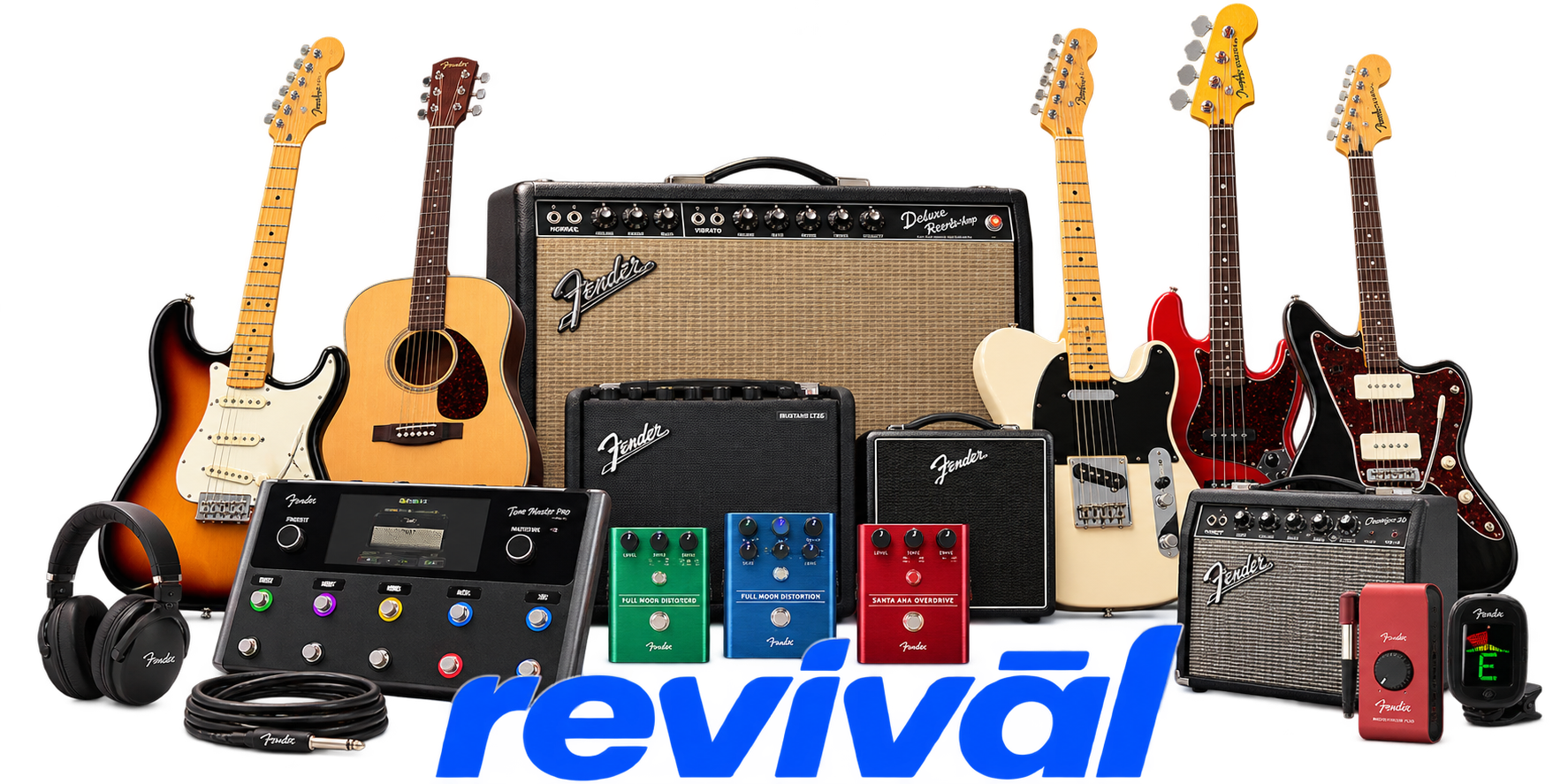
Fender Musical Instruments Corporation is a major global manufacturer of guitars, basses, amplifiers and related professional and consumer music equipment. Founded from Leo Fender’s original instrument business, the company is particularly known for developing some of the most influential electric instruments in modern music, including the Stratocaster, Telecaster, Precision Bass and Jazz Bass. Its current portfolio spans electric and acoustic guitars, basses, guitar and bass amplifiers, effects and audio products, as well as digital music-learning services such as Fender Play. FMIC also manages brands including Fender, Squier, Jackson, Charvel, Gretsch and EVH, with manufacturing distributed between Fender-operated plants in Corona and Ensenada and external manufacturing partners for selected product lines.

2 Most Seen Failures:

Tube Failure / Microphonics

Preamp and power tubes in Fender tube amplifiers can become weak, noisy, microphonic or completely fail, producing crackling, hum, volume loss, unwanted distortion or no output. Hot Rod Deluxe, Deluxe Reverb, Blues Junior and related tube models are frequently affected as tubes age or suffer vibration and thermal cycling.


Cracked Tube-Socket / PCB Solder Joints

Repeated heating, cooling and cabinet vibration can fracture solder joints around tube sockets and other high-stress PCB connections. Symptoms commonly include intermittent audio, crackling, sudden volume changes and operation that changes when the amplifier is moved or tapped.

Dirty or Worn Potentiometers and Switches

Fender guitar, bass and amplifier pots and selector switches can oxidize or wear, resulting in scratchy controls, intermittent channels, signal loss or loud crackling while controls are moved. Severe mechanical wear eventually requires replacement rather than cleaning.

Input / Output Jack Contact Failure

Worn, oxidized or cracked jack contacts and solder joints can cause intermittent output, cutting out, crackling or complete loss of signal. Switching jacks used in amplifier effects loops, headphone outputs and active-instrument battery circuits can also mute the signal path when their internal contacts fail.

Aging / Failed Electrolytic Capacitors

Power-supply filter and other electrolytic capacitors can dry out, leak or lose capacitance as amplifiers age. Typical symptoms include excessive hum, weak or distorted output, instability, power-supply noise and intermittent operation, with older Hot Rod-series amplifiers frequently appearing in repair reports.

Power-Supply Resistor / Regulator Overheating

Certain Fender amplifier designs develop substantial heat around dropping resistors, regulator components and associated PCB areas. Prolonged heat can discolor or damage the board, weaken solder joints and traces, and eventually cause intermittent power, channel-switching faults or complete shutdown.

Speaker / Speaker Connection Failure

Damaged voice coils, fatigued speaker leads, loose terminals or poor cabinet connections can produce buzzing, distorted output, reduced volume or a completely silent amplifier despite otherwise functional electronics. Combo amplifiers are particularly exposed because vibration continuously stresses the speaker and its connections.

Active Preamp / Battery Circuit Failure

Active Fender basses and electronically enhanced instruments can lose output when batteries, battery leads, stereo switching jacks or onboard preamp electronics develop faults. Common symptoms include no active output, intermittent sound when the plug is moved, weak signal or loss of EQ functions.

Digital Control / Firmware and Connectivity Failure

Mustang, Tone Master, Rumble Stage/Studio and other connected Fender amplifiers can experience freezes, UI lag, failed updates, USB-audio faults, Wi-Fi/Bluetooth connection problems or control synchronization errors. Some are firmware defects rather than failed components, although persistent cases can also involve encoders, displays or digital-control hardware.

1 Acme Revival offers repair, service, and part rebuild opportunities for most Fender devices.

Connect with a technician.

  1. 1 Repairs are performed on a best-effort basis. Acme Revival utilizes a network of sophisticated technicians and engineers with diverse service offerings; despite this, factors that influence the repair outcome may ultimately prove unsuccessful. Acme Revival makes no claim that it can, guarantee a repair before your device is sent in for diagnostic evaluation; even then, repair and diagnostic work are not mutually exclusive. Despite well-intentioned quoting, repairs may still prove unsuccessful.
  2. 2 Per information known, researched and collected by Acme Revival and its systems at time of page publishing (October 2, 2026).
  3. *Information regarding this manufacturer/brand/organization is estimated with information collected and known to Acme Revival. This information is intended to provide insights into the spotlight entity, however may not be accurate— information is strictly of estimate nature only.
  4. **The model list shown here may not be an all-inclusive list of the EcoFlow product range. Model list has been derived per information known, researched and collected by Acme Revival and its systems for the US market.