NAND Program Failure
The NAND flash fails to correctly program or write a data page. Exascend SSDs explicitly track accumulated program failures through the SMART "Program Fail Count" attribute.

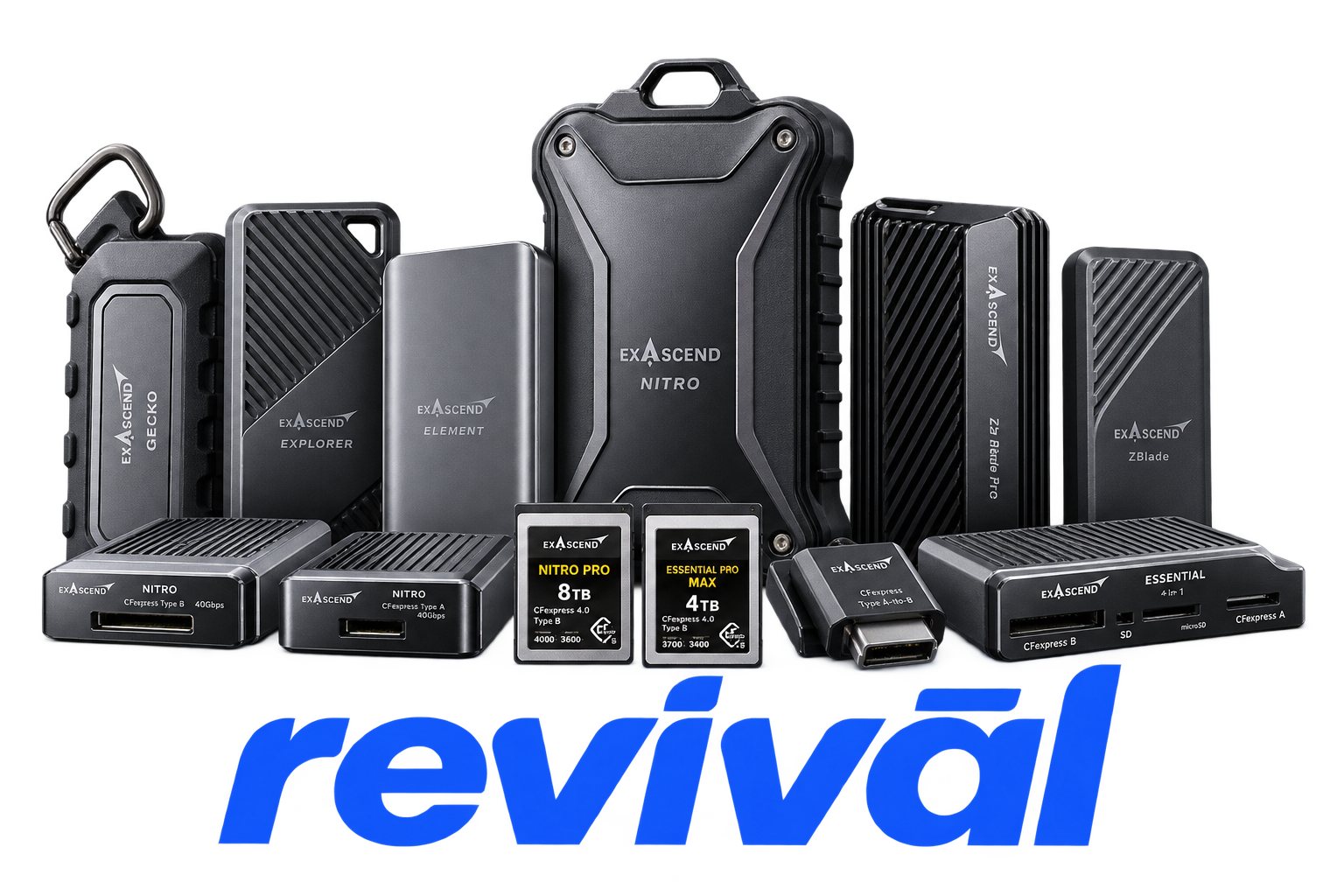
Acme Revival is an independent repair network that operates separately from the manufacturers whose devices we service. Our independence enables a repair model that exists beyond manufacturer-controlled strategies, while preserving the ability to work with manufacturers where appropriate.
Exascend, Inc. is a storage and memory technology OEM founded in 2016 that designs, develops and manufactures high-performance, high-reliability flash-storage products. Its portfolio includes industrial and enterprise SSDs using PCIe/NVMe and SATA interfaces, managed NAND/eMMC and BGA SSDs, DRAM, CFexpress, CFast, SD and microSD memory cards, portable SSDs and related storage products. Exascend serves demanding applications including industrial equipment, automotive and connected vehicles, enterprise/data-center infrastructure, edge computing, aerospace and professional cinematography. The company is particularly known for ruggedized, high-endurance storage, sustained-performance technology, customizable hardware and firmware, and its vertically integrated capabilities spanning design, firmware, software, engineering, manufacturing and testing. Exascend
The NAND flash fails to correctly program or write a data page. Exascend SSDs explicitly track accumulated program failures through the SMART "Program Fail Count" attribute.
A NAND block fails during an erase operation, preventing it from being reliably reused for new data. Exascend SSD firmware records these events through the SMART "Erase Fail Count" attribute and relies on spare/reserved blocks as flash media degrades.
Stored data develops bit errors severe enough that normal error-correction mechanisms cannot reconstruct it. Exascend tracks uncorrectable ECC events and uses LDPC and RAID ECC technologies to reduce the risk of unrecoverable or corrupted data.
Repeated program/erase cycles progressively wear NAND cells, eventually reducing usable flash capacity and reliability. Exascend monitors this through media-wear and remaining-life indicators as well as available reserved space.
Power can disappear while data or NAND mapping information is still being written, potentially causing lost data, corrupted mapping tables, or an inoperable drive. Exascend identifies unexpected power-loss events and uses firmware or hardware power-loss protection on supported models to mitigate this failure mode.
High sustained workloads can raise controller and NAND temperatures enough to trigger throttling, severe performance reduction, or recording interruption. Exascend specifically acknowledges reports of some CFexpress Type A cards becoming hot enough for recording to stop in certain Sony cameras.
Data transmission between a SATA storage device and its host can encounter CRC errors, producing unreliable communication or retries. Exascend SSDs expose both current and lifetime SATA-interface CRC error counters through SMART.
Repeated interface errors can force a SATA device to negotiate a lower signaling rate or experience a failing connection. Exascend tracks both current and lifetime SATA link-down-grade events specifically for diagnosing this condition.
NAND charge naturally degrades over time, particularly as flash wears, potentially producing bit errors, unreadable data, or corrupted files. Exascend addresses this failure mechanism with Data Retention Plus, ECC, data refreshing, and related integrity technologies.
Connect with a technician.

Orders can typically be cancelled 24 hours prior to shipping
Get a real-time offer. Enter the make and model to begin.
Acme offers several ways to pay your service or repair balance.
Securely powered by 
This service is provided by Community Federal Savings Bank (“CFSB”), member FDIC, for which GoCardless Ltd acts as a third-party servicer.
Payable to ACME REVIVAL INC, write Exascend in memo line, and mail your check to: 191 University Blvd. Suite 340, Denver, CO 80206. Payment are collected every weekday excluding federal holidays.