Fan Failure
Cooling fans become stuck, obstructed by dust or foreign material, develop worn bearings, or electrically fail. Loss of airflow can subsequently trigger thermal protection or shutdown.

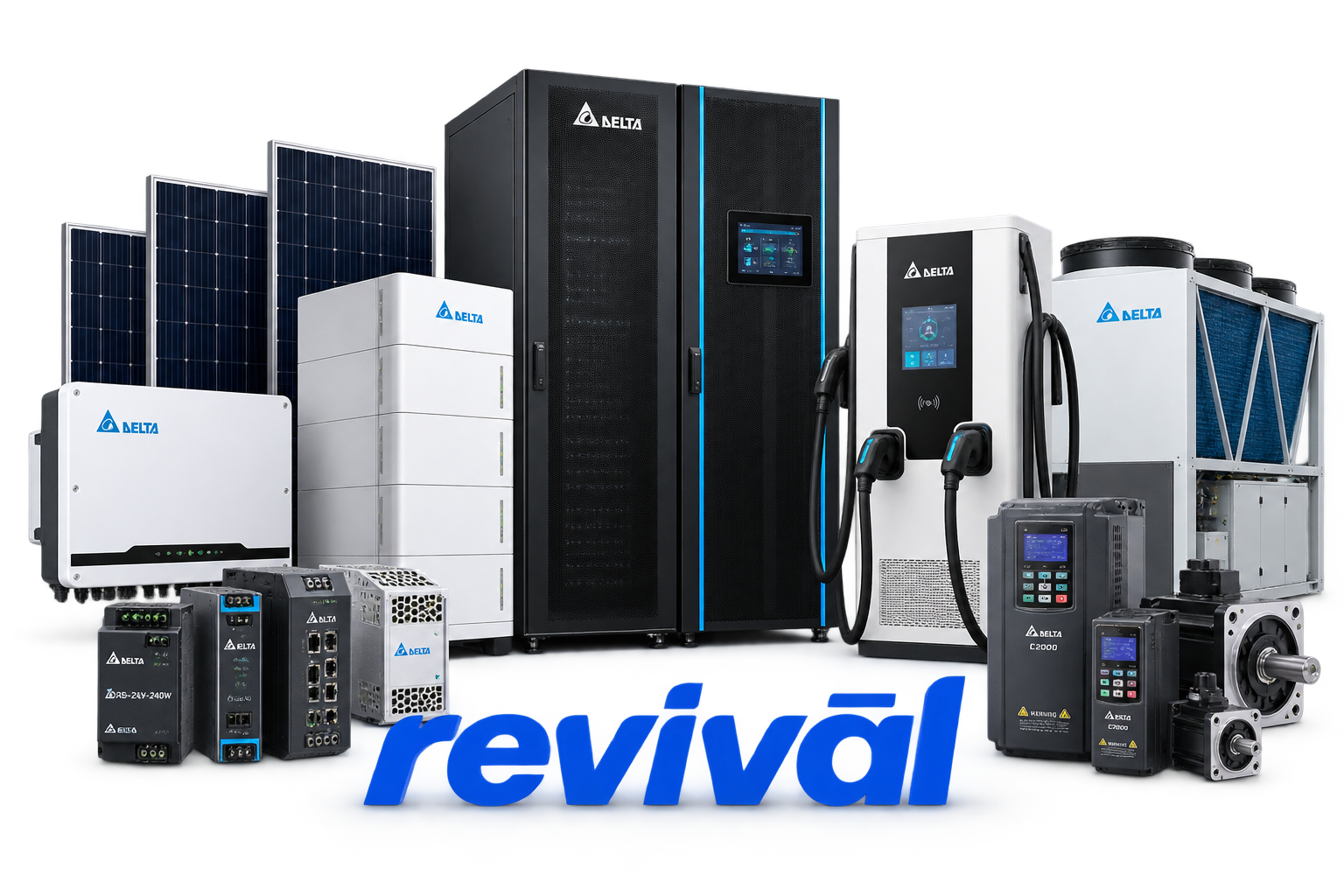
Acme Revival is an independent repair network that operates separately from the manufacturers whose devices we service. Our independence enables a repair model that exists beyond manufacturer-controlled strategies, while preserving the ability to work with manufacturers where appropriate.
Delta Electronics is a large global electronics OEM/ODM specializing in power management, power conversion, and thermal-management technologies. Founded in Taiwan in 1971, the company is particularly known for switching power supplies, power electronics, DC brushless fans, cooling and thermal-management systems, and electronic components. Its broader portfolio includes data-center power and liquid-cooling systems, industrial and building automation, telecom power equipment, EV powertrain electronics and charging equipment, renewable-energy inverters, energy storage, and related infrastructure. Delta is especially prominent in high-efficiency power electronics used in servers, AI/data centers, ICT equipment, industrial systems, electric vehicles, and commercial electronics. In 2025, Power Electronics remained its largest business category at 50% of revenue, and Delta describes itself as a global market leader in switched-mode power supplies and thermal solutions.
Cooling fans become stuck, obstructed by dust or foreign material, develop worn bearings, or electrically fail. Loss of airflow can subsequently trigger thermal protection or shutdown.
UPS batteries lose capacity with age, heat exposure, storage, and repeated discharge cycles, resulting in low-battery warnings, reduced runtime, or failure during backup operation. Systems may report battery replacement, low-voltage, or disconnected-battery faults.
Restricted ventilation, clogged filters, failed fans, excessive ambient temperature, or heavy loading can cause internal components to exceed their thermal limits. The hardware may derate, transfer modes, or shut down to protect power semiconductors.
The inverter stage can develop switching-device, driver, sensing, or related internal faults that prevent correct AC output generation. Typical symptoms include inverter-fault alarms, abnormal output voltage, bypass operation, or complete loss of output.
Faults in the PFC stage, DC-link components, switching devices, or associated control circuitry can produce abnormally high or low DC-bus voltage. The unit commonly enters protection or shutdown because the inverter can no longer operate from a stable DC supply.
Battery-charging circuitry can fail or regulate outside its intended voltage range, leaving batteries undercharged or overcharged. The resulting symptoms include charger alarms, poor backup runtime, battery warnings, and eventual battery deterioration.
A shorted load, excessive current demand, or an internal output-stage fault can activate overcurrent protection and remove the output. In some models, repeated or severe faults can also involve output fuses, relays, SCRs, or switching devices.
MOSFETs, IGBTs, SCRs, rectifiers, and their driver circuits can fail open or short, particularly in high-power conversion stages. Depending on the affected stage, the result can be a blown fuse, no output, abnormal bus voltage, inverter failure, or immediate protection shutdown.
Electrolytic and DC-link capacitors lose capacitance and develop increased ESR as they age or experience sustained heat. Typical symptoms include excessive ripple, unstable output, difficult startup, intermittent operation, and increased electrical stress on surrounding power components.
Connect with a technician.

Orders can typically be cancelled 24 hours prior to shipping
Get a real-time offer. Enter the make and model to begin.
Acme offers several ways to pay your service or repair balance.
Securely powered by 
This service is provided by Community Federal Savings Bank (“CFSB”), member FDIC, for which GoCardless Ltd acts as a third-party servicer.
Payable to ACME REVIVAL INC, write Delta in memo line, and mail your check to: 191 University Blvd. Suite 340, Denver, CO 80206. Payment are collected every weekday excluding federal holidays.