Lamp / LED Source Fails to Illuminate
Fixture does not produce light, or briefly flashes and then goes dark. On HMI/metal-halide models this is commonly associated with an exhausted or damaged lamp, failed strike, or a related ballast/head fault.

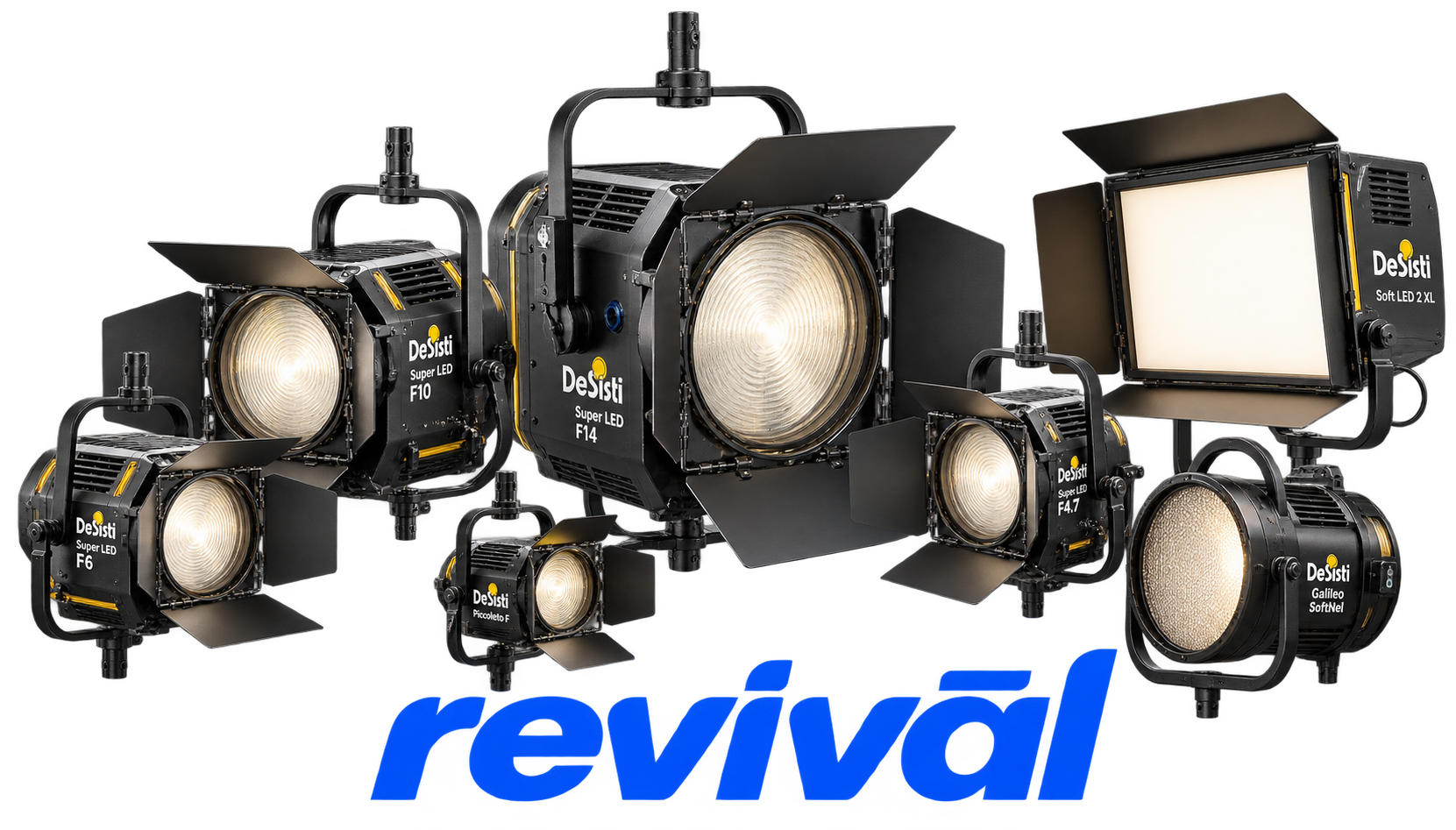
Acme Revival is an independent repair network that operates separately from the manufacturers whose devices we service. Our independence enables a repair model that exists beyond manufacturer-controlled strategies, while preserving the ability to work with manufacturers where appropriate.
De Sisti is an Italian manufacturer of professional lighting and suspension systems founded in 1982, serving primarily broadcast/television studios, film production, theatres, entertainment venues, and architectural applications. Its product portfolio includes professional LED and traditional Fresnel spotlights, soft lights, cyclorama fixtures, high-output studio luminaires, suspension/rigging systems, lighting-control equipment, stands, grip equipment, and related power/control hardware. The company designs, manufactures, tests, and quality-controls its products in Italy and is particularly known for professional studio and broadcast lighting, Fresnel optical systems, patented LED/SSL technologies, and certified studio rigging equipment.
Fixture does not produce light, or briefly flashes and then goes dark. On HMI/metal-halide models this is commonly associated with an exhausted or damaged lamp, failed strike, or a related ballast/head fault.
The fixture receives power but cannot reliably ignite the discharge lamp. De Sisti service documentation identifies failed igniters and unsuccessful strikes as recurring fault conditions across multiple DEB ballast models.
The fixture fails to start, shuts down, or cannot deliver normal output because the ballast, PFC stage, inverter, or other power electronics have failed. Some failures can involve shorted power components within the ballast.
Damaged, loose, incorrectly seated, or oxidized mains and lamp connectors can cause intermittent operation or complete failure to illuminate. High-voltage cables and connector terminations are also identified as components requiring regular inspection.
The fixture or ballast reaches an excessive internal temperature and may shut down or report an overtemperature condition. Blocked air inlets, inadequate clearance, cooling-system problems, or operation above specified ambient temperatures can contribute.
Heat and high-voltage stress can crack, thermally damage, or otherwise degrade lamp holders and their associated wiring. De Sisti specifies frequent inspection and replacement when even minor cracking or visible thermal damage appears.
A defective, misaligned, or open lens-door microswitch prevents some fixtures and ballasts from starting even when the rest of the system is functional. The resulting symptom can appear as a disconnected head, open lens, or lamp-not-connected condition.
The mechanical system that moves the lamp or optical carriage between spot and flood can loosen, bind, or require adjustment after use. Field reports also describe plastic spot/flood control knobs cracking or melting on some conventional Fresnel models.
Fresnel lenses and protective shields can crack or become deeply scratched, while reflectors can become cracked or opaque with age and heat exposure. These defects reduce optical performance and, where protective components are involved, can make the fixture unsafe to operate.
Connect with a technician.

Orders can typically be cancelled 24 hours prior to shipping
Get a real-time offer. Enter the make and model to begin.
Acme offers several ways to pay your service or repair balance.
Securely powered by 
This service is provided by Community Federal Savings Bank (“CFSB”), member FDIC, for which GoCardless Ltd acts as a third-party servicer.
Payable to ACME REVIVAL INC, write De Sisti in memo line, and mail your check to: 191 University Blvd. Suite 340, Denver, CO 80206. Payment are collected every weekday excluding federal holidays.