Storage / Array Drive Failure
Storage HDDs, SSDs, SAS, or NVMe drives can develop SMART errors, bad sectors, excessive error rates, or complete failures. Datto appliances monitor drive health and may require replacement of a failed array drive.

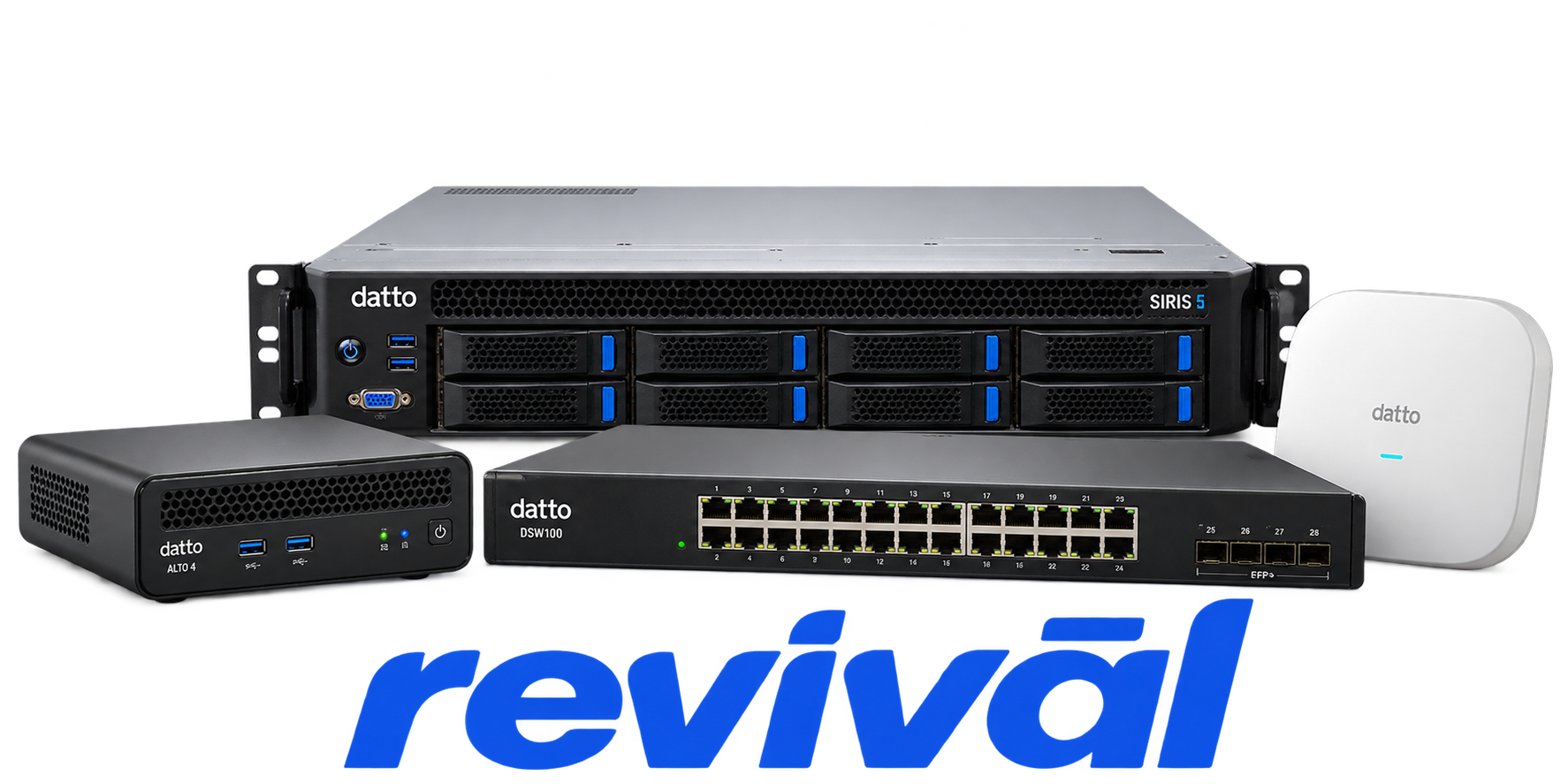
Acme Revival is an independent repair network that operates separately from the manufacturers whose devices we service. Our independence enables a repair model that exists beyond manufacturer-controlled strategies, while preserving the ability to work with manufacturers where appropriate.
Datto, Inc. is a provider of business continuity, disaster recovery, cybersecurity and cloud-based IT solutions designed primarily for managed service providers (MSPs) serving small and midsize businesses. The company is particularly known for its SIRIS and ALTO backup appliances, which combine physical hardware, Datto software and cloud infrastructure to provide local and cloud backup, rapid data restoration and disaster recovery. Its SIRIS platform can restore individual files or entire workloads and virtualize protected systems locally or in the Datto Cloud during outages. Datto also offers NAS/data-storage and MSP management/security technologies. Rather than manufacturing the underlying hardware itself, Datto relies on third-party manufacturers; newer SIRIS and ALTO appliances are largely based on Dell OptiPlex, Precision and PowerEdge hardware that Datto integrates with its software and cloud services. Datto
Storage HDDs, SSDs, SAS, or NVMe drives can develop SMART errors, bad sectors, excessive error rates, or complete failures. Datto appliances monitor drive health and may require replacement of a failed array drive.
The dedicated operating-system drive can fail or become inaccessible, preventing the Datto appliance from booting normally or being remotely managed. Datto documents OS-drive replacement procedures across multiple SIRIS and ALTO generations.
A failed or degrading PSU can cause a completely dead appliance, startup failures, spontaneous reboots, lockups, or components that fail to spin up. Abnormal voltages, predictive-failure readings, and PSU status LEDs can indicate impending failure.
Chassis, CPU, or PSU fans can stop spinning, run too slowly, lose their motherboard connection, or otherwise fail to provide sufficient airflow. The resulting heat can trigger hardware alerts and potentially contribute to drive or system instability.
Drives and other components can exceed safe operating temperatures because of failed fans, restricted airflow, environmental heat, or incorrect fan behavior. Datto specifically identifies temperature alerts as one of its most common classes of hardware alert.
Faulty, improperly seated, or undetected RAM can prevent POST, produce memory errors, or cause system instability. Multiple Datto appliance generations include POST or diagnostic codes specifically identifying missing or failed memory.
System-board faults can cause an appliance to fail POST or produce chipset, clock, controller, DMA, timer, I/O, BIOS, or other low-level hardware errors. Depending on the diagnostic code, Datto's documented corrective action can require system-board replacement.
Processor faults can prevent successful POST or cause processor-specific diagnostic codes. Datto documentation identifies CPU failures directly on newer models and processor/cache-related failures on older appliance hardware.
A depleted or defective CMOS battery can produce CMOS errors, stop the time-of-day clock, or prevent BIOS configuration from being retained correctly. Datto POST diagnostics explicitly identify CMOS battery and clock failures, with battery replacement as a documented corrective action.
Connect with a technician.

Orders can typically be cancelled 24 hours prior to shipping
Get a real-time offer. Enter the make and model to begin.
Acme offers several ways to pay your service or repair balance.
Securely powered by 
This service is provided by Community Federal Savings Bank (“CFSB”), member FDIC, for which GoCardless Ltd acts as a third-party servicer.
Payable to ACME REVIVAL INC, write Datto in memo line, and mail your check to: 191 University Blvd. Suite 340, Denver, CO 80206. Payment are collected every weekday excluding federal holidays.