Amplifier Module Failure
Powered loudspeakers may power up but produce no output, intermittent audio, distortion, or remain in protection due to faults in the internal Class-D amplifier/power electronics.

Acme Revival is an independent repair network that operates separately from the manufacturers whose devices we service. Our independence enables a repair model that exists beyond manufacturer-controlled strategies, while preserving the ability to work with manufacturers where appropriate.
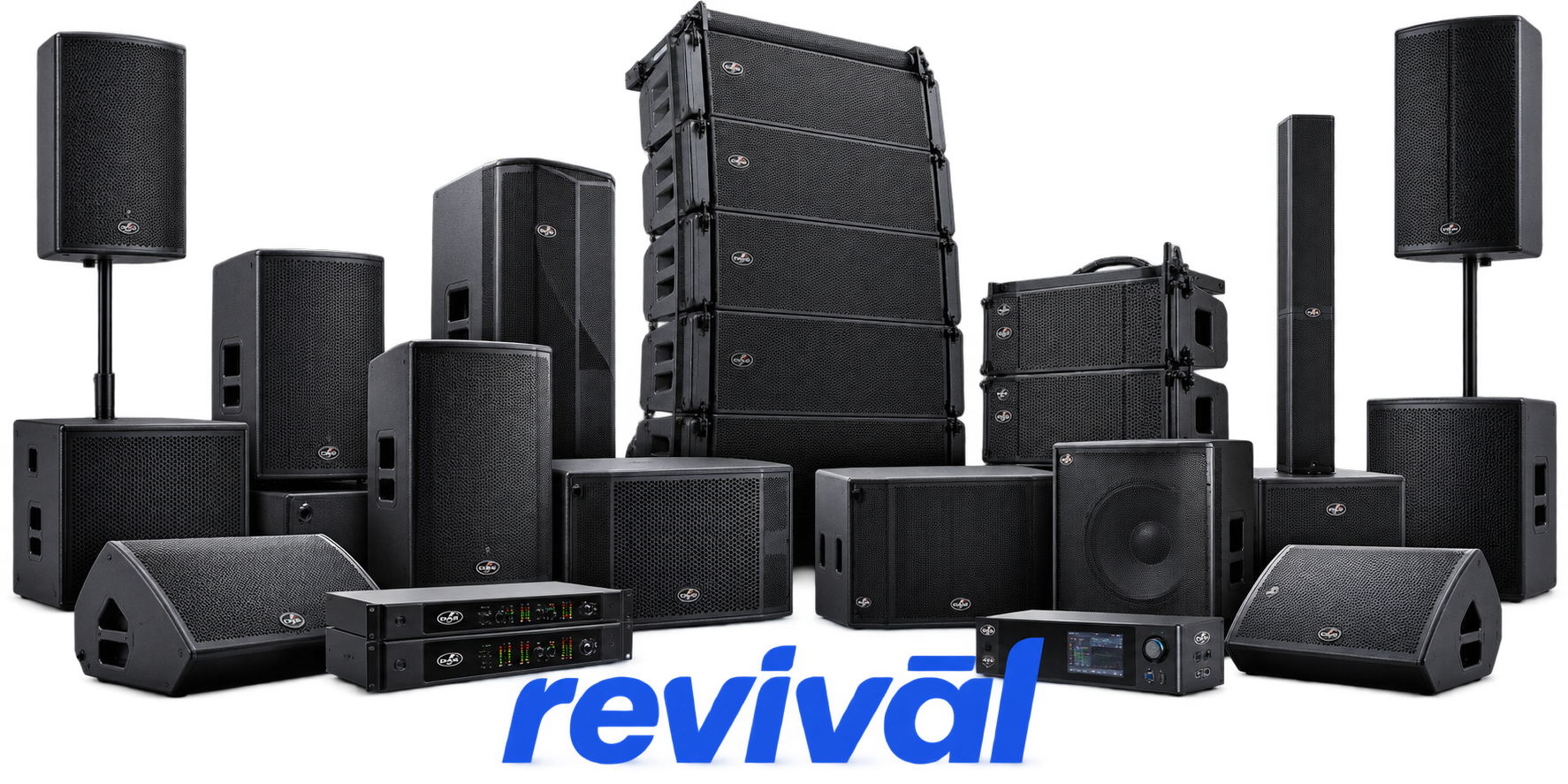
DAS Audio is a Spanish, family-owned professional audio manufacturer founded in 1971, specializing in professional loudspeakers, powered speaker systems, line arrays, subwoofers, stage monitors, amplifiers, transducers, DSP-equipped systems, and associated sound-reinforcement electronics. Its equipment is designed primarily for touring and live production, concerts and festivals, permanent installations, entertainment venues, arenas and stadiums, and portable PA applications. A major distinguishing feature of DAS is its vertically integrated manufacturing operation in Valencia: the company develops acoustics, mechanics and electronics and manufactures much of its own transducers, cabinets and electronics before completing painting and final assembly in Spain. DAS is particularly known for scalable high-output professional sound systems such as its ARA, EVENT, AERO and installation-oriented product families, with an emphasis on reliability, durability and controlled high-SPL sound reinforcement.
Powered loudspeakers may power up but produce no output, intermittent audio, distortion, or remain in protection due to faults in the internal Class-D amplifier/power electronics.
Units can become completely dead, repeatedly shut down, or fail to start when the switch-mode power supply, rectification circuitry, capacitors, or associated power components fail.
Powered Action, Vantec, Event, and Aero models can lose output or substantially reduce available power when amplifier temperature becomes excessive. Blocked airflow, sustained high output, component aging, or inadequate cooling can contribute to recurring thermal protection.
DAS amplifiers may remain muted in protection with no speaker output because protection circuitry detects DC, excessive current, abnormal rail voltage, overheating, or an internal amplifier fault. Older amplifier designs can also develop relay or relay-drive faults that prevent the output relays from engaging.
Low-frequency drivers can develop open, burned, rubbing, or partially shorted voice coils after excessive power, clipping, overheating, or excessive low-frequency excursion. Symptoms include missing bass, severe distortion, scraping noises, or substantially reduced output.
Compression drivers and HF diaphragms can fail from excessive high-frequency energy, clipping, or prolonged operation beyond rated limits. The cabinet continues producing bass/midrange but has little or no treble output.
Damaged XLR connectors, cracked solder joints, input-board faults, or deteriorated contacts can cause no signal, intermittent audio, crackling, or signal loss when the connector or cable is moved.
DSP-equipped Altea, Vantec, Action, and related powered models can develop control, display, preset, firmware, or signal-processing faults that result in abnormal operation, missing output, or settings that fail to operate correctly.
Fan-cooled amplifiers and powered systems can develop failed or obstructed cooling systems, allowing internal temperature to rise until output limiting or thermal protection occurs. Persistent cooling failure can accelerate deterioration of power-supply and amplifier components.
Connect with a technician.

Orders can typically be cancelled 24 hours prior to shipping
Get a real-time offer. Enter the make and model to begin.
Acme offers several ways to pay your service or repair balance.
Securely powered by 
This service is provided by Community Federal Savings Bank (“CFSB”), member FDIC, for which GoCardless Ltd acts as a third-party servicer.
Payable to ACME REVIVAL INC, write DAS Audio in memo line, and mail your check to: 191 University Blvd. Suite 340, Denver, CO 80206. Payment are collected every weekday excluding federal holidays.