Monitor Remote Encoder Failure
The rotary encoder on MONITOR-ST remotes can wear or miss steps, causing erratic volume control or automatically engaging DIM. Dangerous Music specifically identifies encoder contact wear as a cause of this behavior.

Acme Revival is an independent repair network that operates separately from the manufacturers whose devices we service. Our independence enables a repair model that exists beyond manufacturer-controlled strategies, while preserving the ability to work with manufacturers where appropriate.
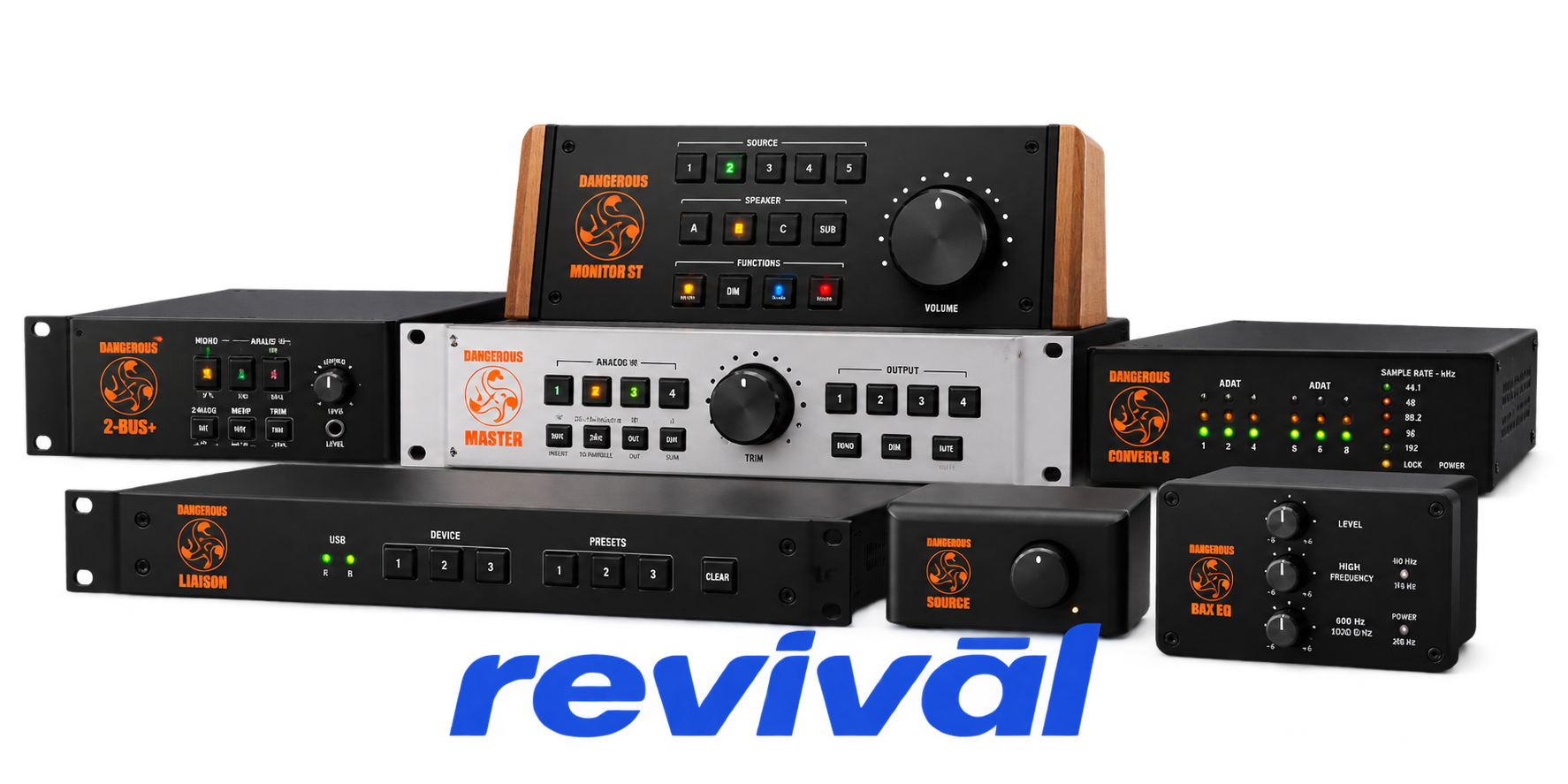
Dangerous Music, Inc. is a U.S. manufacturer of high-end professional studio audio electronics designed primarily for recording, mixing, and mastering engineers. Its product portfolio centers on analog summing mixers, monitor controllers, mastering processors, equalizers, compressors, analog routing/switching systems, headphone monitoring equipment, and high-quality A/D and D/A converters. The company grew out of custom mastering-console and transfer-console design work for facilities including Masterdisk, Hit Factory, Sterling Sound, and Absolute Audio, and became particularly associated with bringing mastering-grade analog signal paths and high-fidelity monitoring to DAW-based studios. Products such as the 2-BUS/2-BUS+, BAX EQ, COMPRESSOR, MASTER, LIAISON, SOURCE, MONITOR ST, and CONVERT series reflect its emphasis on transparent signal processing, analog workflow, and critical monitoring.
The rotary encoder on MONITOR-ST remotes can wear or miss steps, causing erratic volume control or automatically engaging DIM. Dangerous Music specifically identifies encoder contact wear as a cause of this behavior.
External AC/DC power supplies can fail, become intermittent, or stop powering the unit entirely. Dangerous Music specifically documents failed or deteriorating power adapters on SOURCE units.
MONITOR-ST/SR remotes can lose communication with the rack unit, resulting in unresponsive controls, incorrect switching, or apparent system lockups. Reconnecting or resetting the remote may temporarily restore operation.
The numerous electromechanical relays used for source selection, speaker routing, and stepped attenuation can develop worn or unreliable contacts. Symptoms can include missing channels, intermittent audio, incorrect levels, or failure to switch inputs or outputs.
A left or right channel may become weak, intermittent, distorted, or completely absent because of relay contacts, connectors, analog-stage components, or power-rail problems. This can affect monitor controllers, summing mixers, converters, and mastering processors.
CONVERT, DAC-ST, DAC-SR, SOURCE, and other digitally equipped models can fail to acquire or maintain synchronization with AES, S/PDIF, ADAT, or USB sources. Clocking, digital receiver, connector, or associated power-supply faults can cause dropouts or complete loss of digital audio.
Digitally controlled Dangerous Music hardware can occasionally become unresponsive and require a reset or power cycle. A published MONITOR-ST review documented a remote/system crash that was subsequently addressed with firmware.
Aging potentiometers, switches, encoders, and connectors can develop intermittent contact, producing crackling, level jumps, dropouts, or inconsistent control response. Models using conventional potentiometers are particularly susceptible as their mechanical controls accumulate wear.
Failed regulators, capacitors, rectifiers, or other power-supply components can produce low output, distortion, excessive noise, intermittent operation, or a completely dead unit. Heat and inadequate rack ventilation can accelerate component aging, which is why Dangerous Music recommends ventilation around its rack hardware.
Connect with a technician.

Orders can typically be cancelled 24 hours prior to shipping
Get a real-time offer. Enter the make and model to begin.
Acme offers several ways to pay your service or repair balance.
Securely powered by 
This service is provided by Community Federal Savings Bank (“CFSB”), member FDIC, for which GoCardless Ltd acts as a third-party servicer.
Payable to ACME REVIVAL INC, write Dangerous Music in memo line, and mail your check to: 191 University Blvd. Suite 340, Denver, CO 80206. Payment are collected every weekday excluding federal holidays.