Data HDD Failure
A HyperStore data drive develops read/write errors, becomes read-only, or becomes inaccessible. HyperStore can automatically disable the failed drive and migrate its storage tokens to healthy drives on the same node.

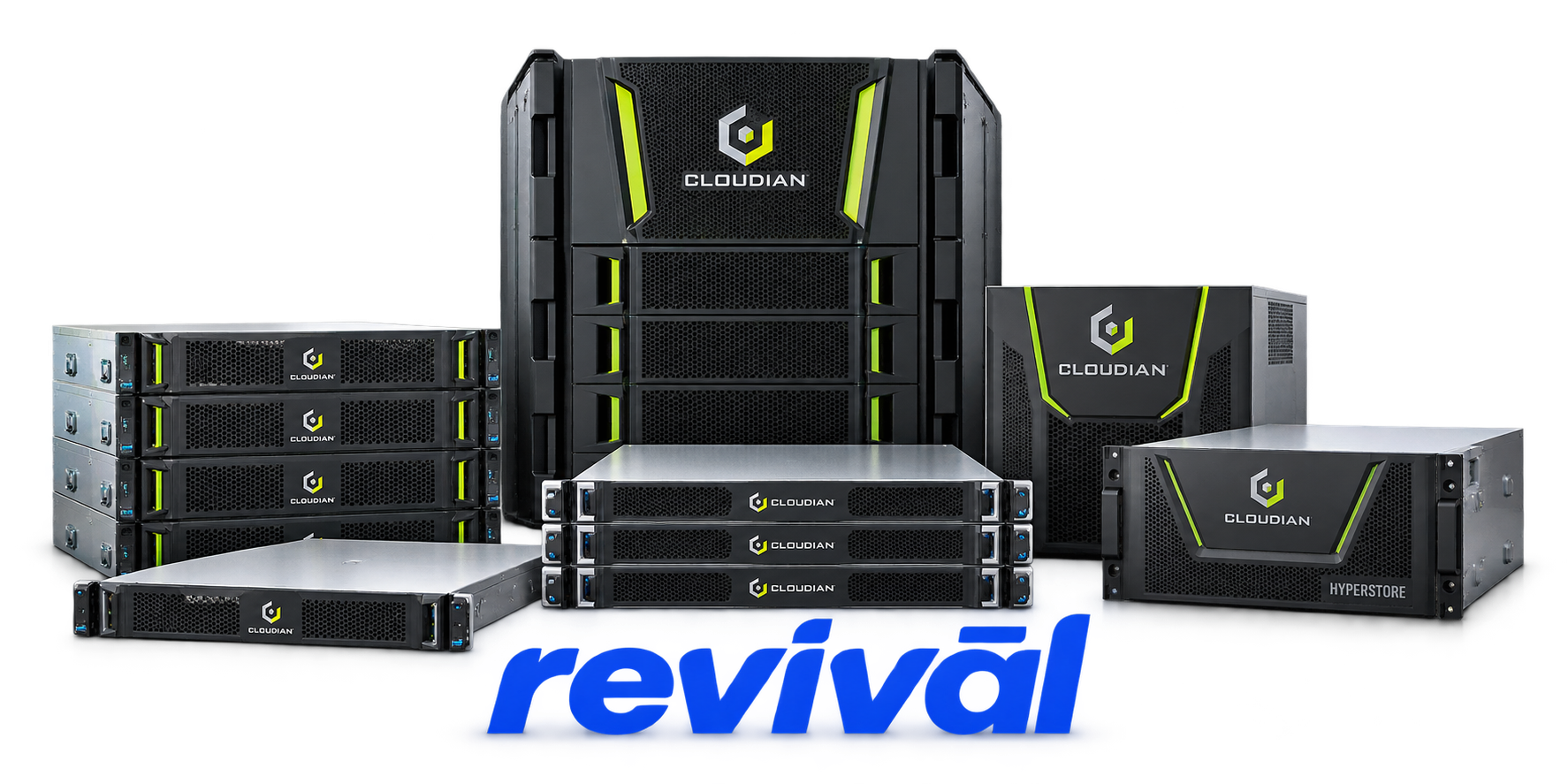
Acme Revival is an independent repair network that operates separately from the manufacturers whose devices we service. Our independence enables a repair model that exists beyond manufacturer-controlled strategies, while preserving the ability to work with manufacturers where appropriate.
Cloudian, Inc. is an enterprise data-storage technology company specializing in S3-compatible object storage software and storage appliances. Its flagship HyperStore platform is designed to store and manage very large volumes of unstructured data across on-premises data centers, edge environments, private clouds, and hybrid-cloud infrastructure. Cloudian offers HyperStore both as software-defined storage that runs on industry-standard servers and as preconfigured HDD- and flash-based storage appliances, with current systems ranging from dense rackmount disk arrays to high-performance NVMe flash platforms. The company is particularly known for Amazon S3 API compatibility, exabyte-scale storage, geo-distributed architecture, data immutability/ransomware protection, and hybrid-cloud integration. Its systems are used for enterprise backup and archive, AI/ML data infrastructure, analytics/data lakes, media repositories, and other capacity-intensive workloads.
A HyperStore data drive develops read/write errors, becomes read-only, or becomes inaccessible. HyperStore can automatically disable the failed drive and migrate its storage tokens to healthy drives on the same node.
One or more drives containing the appliance operating system fail or become inaccessible. HyperStore appliances can automatically report failed OS disks through Smart Support, and redundant boot-drive configurations are used on current appliance models.
An SSD or NVMe device used for metadata fails or becomes inaccessible. Current HyperStore models use dedicated, typically paired metadata drives, making these devices a distinct hardware failure point from bulk data drives.
A server node becomes unreachable or stops operating because of an underlying hardware problem. HyperStore is designed to tolerate node failures through its distributed peer-to-peer architecture and data replication or erasure coding.
One appliance power-supply unit stops supplying power or reports a fault. HyperStore appliance designs use redundant power supplies so that a single PSU failure does not normally require the node to shut down.
A chassis or system fan stops operating or runs outside its expected range. HyperStore appliances contain multiple fans or redundant cooling modules, allowing cooling to continue while the failed component is serviced.
A NIC, network port, or associated physical connection fails, causing loss or degradation of connectivity to a HyperStore node. HyperStore appliances provide multiple network interfaces and the distributed architecture is designed to tolerate temporary network or node connectivity failures.
A server DIMM develops correctable or uncorrectable memory errors or becomes unusable. HyperStore appliances contain substantial server-class RAM capacity, making memory modules one of the replaceable server hardware components whose failure can impair or take down a node.
A storage controller, I/O path, or drive backplane develops a fault that makes one or multiple installed drives inaccessible even though the drives themselves may remain functional. HyperStore distinguishes multipath accessibility from actual disk failure and disables a multipath device only when all paths to that device have failed.
Connect with a technician.

Orders can typically be cancelled 24 hours prior to shipping
Get a real-time offer. Enter the make and model to begin.
Acme offers several ways to pay your service or repair balance.
Securely powered by 
This service is provided by Community Federal Savings Bank (“CFSB”), member FDIC, for which GoCardless Ltd acts as a third-party servicer.
Payable to ACME REVIVAL INC, write Cloudian HyperStore in memo line, and mail your check to: 191 University Blvd. Suite 340, Denver, CO 80206. Payment are collected every weekday excluding federal holidays.