[Motor Connection Failure]
Motor cables/connectors can become loose or disconnect during operation, causing one or more axes to stop responding. Motor connections should be checked when an axis unexpectedly loses movement.

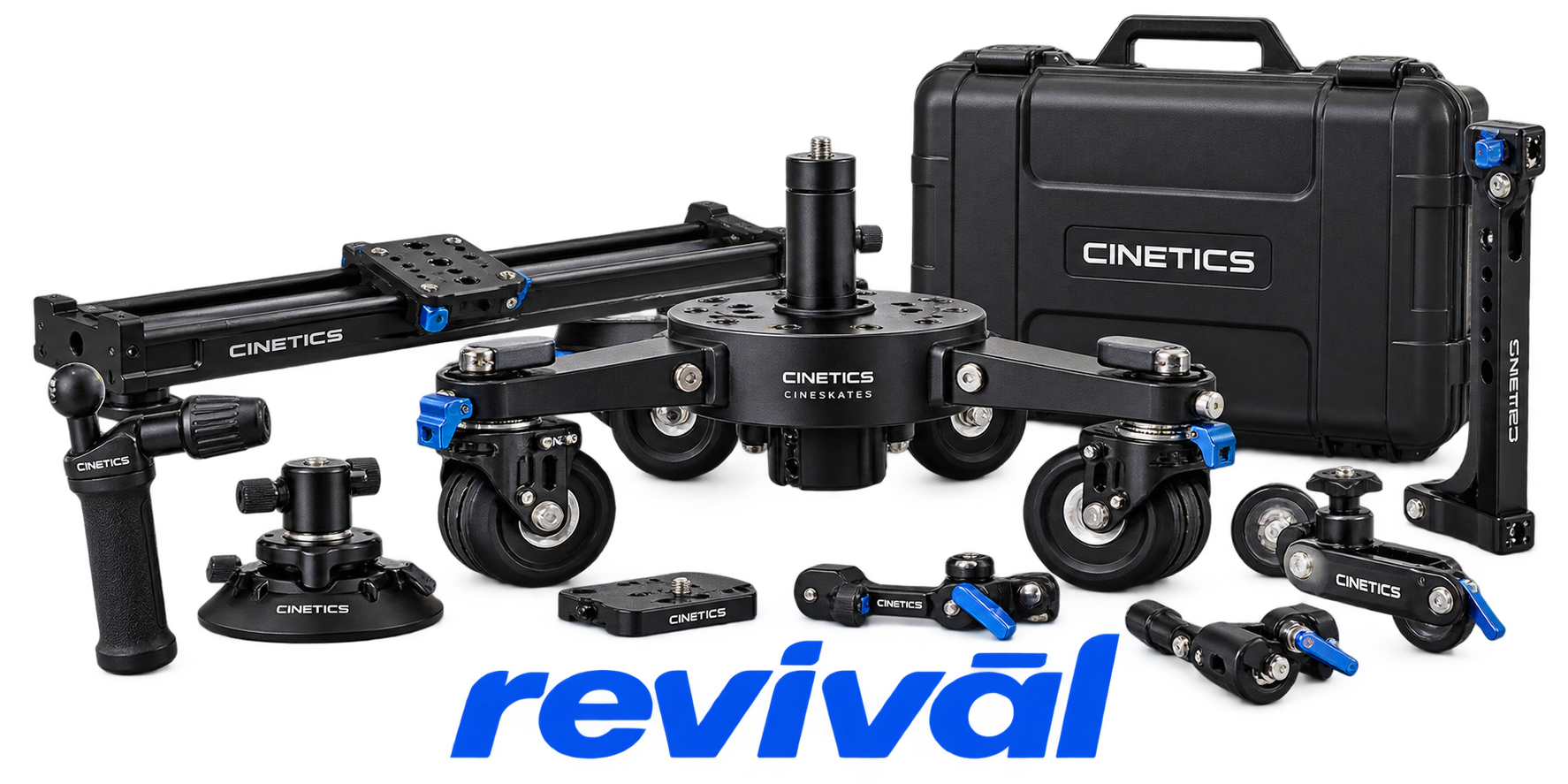
Acme Revival is an independent repair network that operates separately from the manufacturers whose devices we service. Our independence enables a repair model that exists beyond manufacturer-controlled strategies, while preserving the ability to work with manufacturers where appropriate.
Cinetics is a U.S. designer and manufacturer of portable camera-motion and filmmaking equipment used by photographers, videographers, and filmmakers. Founded in 2011, the company became known through its Kickstarter-launched CineSkates portable camera dolly and subsequently expanded into camera sliders, dollies, mounting systems, and electronically controlled multi-axis motion systems such as Lynx and Axis360. Its equipment is designed to provide smooth, repeatable camera movement for video, time-lapse, and stop-motion work while being substantially more portable than traditional studio motion equipment. Cinetics describes its technology as hand-built by its team in Austin, and independent product documentation confirms that CineSkates were assembled entirely in Austin, with most components manufactured in the United States.
Motor cables/connectors can become loose or disconnect during operation, causing one or more axes to stop responding. Motor connections should be checked when an axis unexpectedly loses movement.
Misalignment where slider rail sections or extension rods join can cause shaking, bumps, or uneven carriage movement. Even small alignment errors at the joint can become visible as vibration in recorded footage.
A loose motor or drivetrain can introduce unwanted play, inconsistent positioning, or reduced motion accuracy. Cinetics specifically provides troubleshooting guidance for adjusting loose motors.
The micro-USB connector on CineMoco controllers is physically fragile and can be damaged through repeated or forceful cable insertion. Damage can prevent reliable USB communication, charging, or firmware updating.
Lynx controllers can experience difficulty establishing or maintaining the Bluetooth connection required for app-based control. A controller reset also forces the Bluetooth connection to be re-established before app control can resume.
Lynx slider motors can continue driving the carriage into the physical end of the slider because the system does not automatically calibrate its travel limits. Repeated overruns can place unnecessary stress and wear on the motor and drivetrain.
Large or poorly balanced camera rigs can overload one side of the slider carriage bearings and cause sticking, hesitation, or uneven travel. Correct camera balance and carriage drag adjustment are important for smooth movement.
An off-center camera or lens can create an unbalanced load on the pan/tilt mechanism, causing it to hang up and then jerk back into position. Centering the camera's mass around the rotation axis reduces this problem.
Camera mounting fasteners can bottom out before securely clamping the camera, allowing the camera to twist or move on the mounting plate. Correctly sized fasteners or appropriate washers are needed to obtain a secure mount.
Connect with a technician.

Orders can typically be cancelled 24 hours prior to shipping
Get a real-time offer. Enter the make and model to begin.
Acme offers several ways to pay your service or repair balance.
Securely powered by 
This service is provided by Community Federal Savings Bank (“CFSB”), member FDIC, for which GoCardless Ltd acts as a third-party servicer.
Payable to ACME REVIVAL INC, write Cinetics in memo line, and mail your check to: 191 University Blvd. Suite 340, Denver, CO 80206. Payment are collected every weekday excluding federal holidays.