
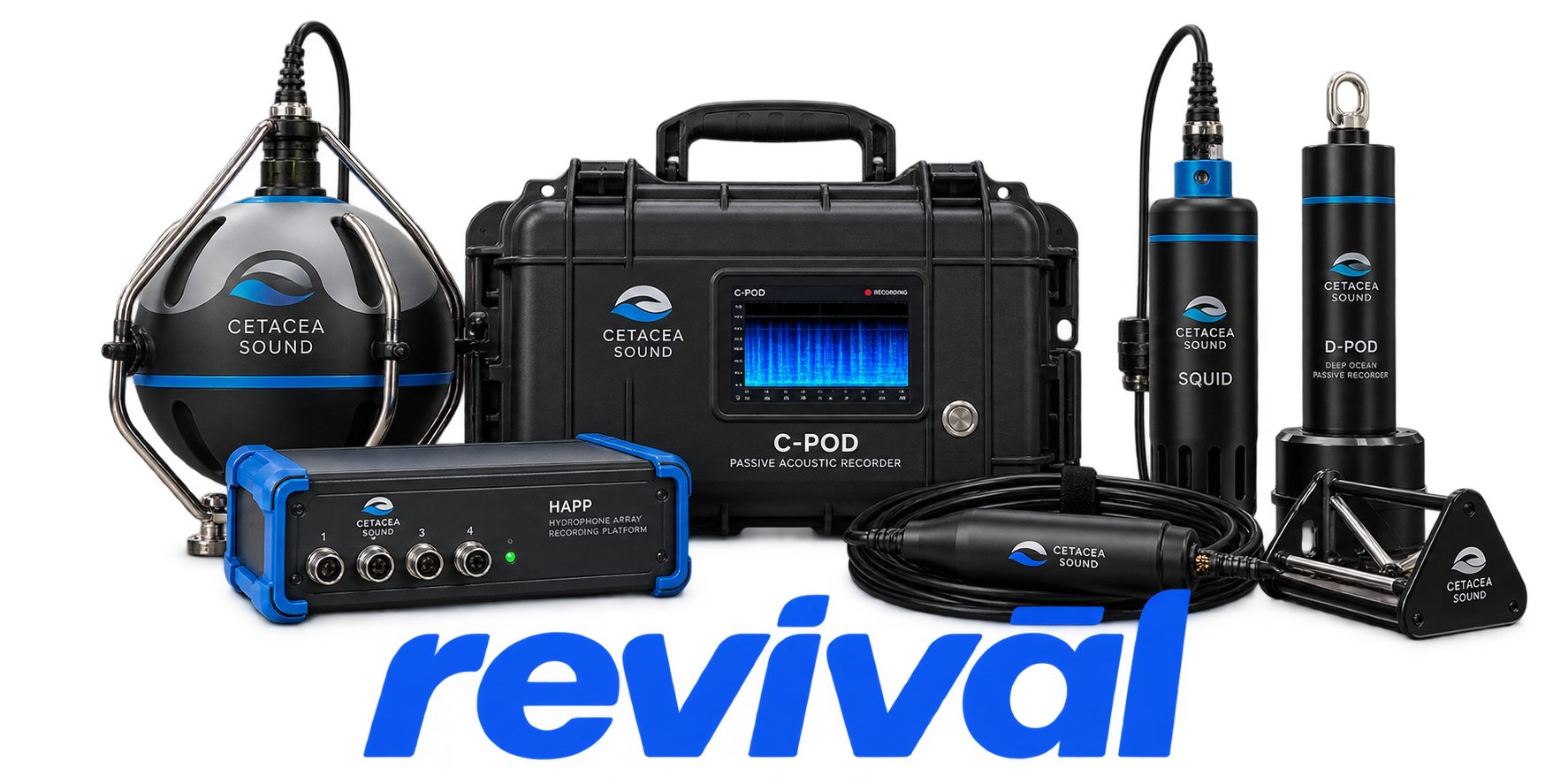
Cetacea Sound

Repair, Service, and Parts

Cetacea Sound repair, service, and parts

Acme Revival is an independent repair network that operates separately from the manufacturers whose devices we service. Our independence enables a repair model that exists beyond manufacturer-controlled strategies, while preserving the ability to work with manufacturers where appropriate.

Plymouth, Minnesota — Hennepin County, USA
Manuf. Location
≈ US $2M
Annual Revenue (est)
Classroom Audio Systems
End Use Segment

Cetacea Sound Corp. is a U.S. professional-audio manufacturer specializing in compact sound reinforcement and voice-amplification systems for classrooms, training rooms, and other small group-listening environments. Founded in 1996 and based in Plymouth, Minnesota, the company designs and manufactures its products in the United States. Cetacea is particularly known for its Astronaut ceiling-mounted powered speaker systems and patented omnidirectional acoustic approach, intended to distribute speech and multimedia audio evenly throughout classrooms while emphasizing vocal intelligibility. Its product portfolio also includes Astronaut Soundfield classroom voice-amplification systems and Orbiter wireless pendant microphones for teachers and presenters. The company's systems are designed for straightforward installation and integration with projectors, interactive displays, computers, televisions, and existing AV equipment, with education representing its principal market alongside corporate training, healthcare, government, and institutional applications.

2 Most Seen Failures:

No Power / Failed Power Supply

Astronaut and Ensemble systems may show no power or no green status LED due to a failed 15V power supply, damaged DC connection, or incorrect/unapproved adapter. Cetacea specifically warns that unsuitable power supplies can permanently damage the amplifier or other internal components.


No Audio Output

Powered Astronaut, Ensemble, and Soundfield systems can power on normally yet produce no sound because of failed or loose input connections, source-output problems, amplifier faults, or incorrect source settings. Cetacea identifies poor connections and poor audio sources among the most common causes of speaker problems.

Loud Buzz / Unterminated Audio Input

Astronaut systems can develop a pronounced continuous buzz when an audio input or cable is left electrically unterminated. Cetacea recommends terminating speaker cables through the source and/or the supplied inline volume attenuator because the amplifier input is not gated.

Low-Level Hum / EMI Noise

Astronaut and Soundfield systems can exhibit persistent hum or background noise when long unbalanced 3.5 mm cables pick up electromagnetic interference. Poor shielding, cable routing, grounding, or deteriorated audio cables can make the problem substantially worse.

Amplifier Failure from Input Overdrive

Astronaut and Ensemble amplifier circuitry can fail prematurely when driven from excessive line-level signals, amplified outputs, bass-boosted sources, equalizers, or other signal-processing modes. Cetacea documentation explicitly warns that overdriving its amplifier stages can cause premature hardware failure.

Orbiter Microphone Will Not Pair

Orbiter pendant microphones may fail to establish a wireless connection with the Astronaut Soundfield or Orbiter Commander, typically indicated by the absence of the solid amber connection LED. Pairing problems can also occur when incompatible V1, V2, and V3 microphone/receiver hardware is mixed.

Orbiter Microphone No Audio

An Orbiter pendant may power on and appear connected while transmitting no usable microphone audio because of receiver, output connection, volume-control, or microphone-path problems. A connected receiver should display a solid amber LED, making no-audio faults distinguishable from basic pairing failures.

Orbiter Battery / Charging Failure

Orbiter pendants can fail to power on or maintain operation when the internal battery is depleted or the charging system is not functioning correctly. Cetacea directs users with no green power LED to place the pendant on its charger and verify charging activity before further troubleshooting.

Speaker Distortion / Degraded Audio

Astronaut and Ensemble systems may produce distorted, weak, or otherwise degraded sound from excessive source level, poor connections, damaged cabling, amplifier stress, or transducer problems. Cetacea specifically cautions against excessive source volume and signal-processing effects because they can overdrive the system and ultimately damage it.

1 Acme Revival offers repair, service, and part rebuild opportunities for most Cetacea Sound devices.

Connect with a technician.

  1. 1 Repairs are performed on a best-effort basis. Acme Revival utilizes a network of sophisticated technicians and engineers with diverse service offerings; despite this, factors that influence the repair outcome may ultimately prove unsuccessful. Acme Revival makes no claim that it can, guarantee a repair before your device is sent in for diagnostic evaluation; even then, repair and diagnostic work are not mutually exclusive. Despite well-intentioned quoting, repairs may still prove unsuccessful.
  2. 2 Per information known, researched and collected by Acme Revival and its systems at time of page publishing (September 23, 2026).
  3. *Information regarding this manufacturer/brand/organization is estimated with information collected and known to Acme Revival. This information is intended to provide insights into the spotlight entity, however may not be accurate— information is strictly of estimate nature only.
  4. **The model list shown here may not be an all-inclusive list of the EcoFlow product range. Model list has been derived per information known, researched and collected by Acme Revival and its systems for the US market.