Worn Coffee Grinder Burrs
Ceado E37, E6, E92 and related grinder models can develop inconsistent or increasingly coarse grind output as the burrs wear. Burr replacement is required once adjustment and cleaning no longer restore uniform grinding.

Acme Revival is an independent repair network that operates separately from the manufacturers whose devices we service. Our independence enables a repair model that exists beyond manufacturer-controlled strategies, while preserving the ability to work with manufacturers where appropriate.
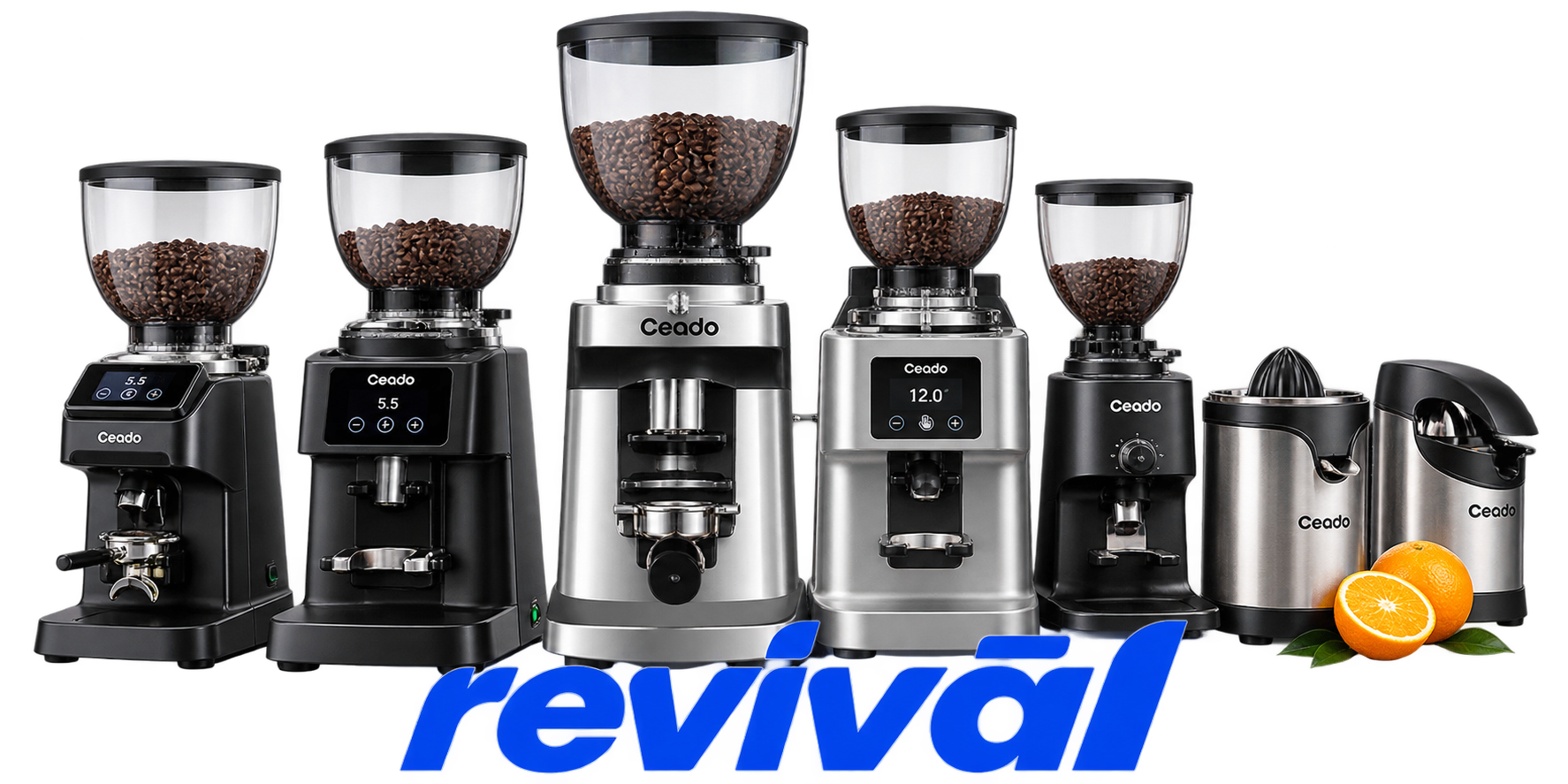
Ceado S.r.l. is an Italian manufacturer of professional coffee and beverage-preparation equipment based and manufactured in the Venice area. Its product portfolio centers on commercial coffee grinders and grinder burrs, supplemented by coffee brewers, juice extractors, citrus juicers, high-performance blenders, drink mixers, and ice crushers for cafés, bars, restaurants, specialty-coffee operations, and other foodservice environments. The company traces its technical heritage to founder Egidio Girardi's work with coffee grinders in Venice beginning in 1952, while the Ceado business itself dates its establishment to 1999. Ceado is particularly associated with premium espresso and specialty-coffee grinders, including its E37 and newer REV families, and proprietary technologies such as Steady Lock and Sweep-Out. Its equipment emphasizes Italian engineering, precision grinding, flavor optimization, durability, and professional high-volume beverage preparation.
Ceado E37, E6, E92 and related grinder models can develop inconsistent or increasingly coarse grind output as the burrs wear. Burr replacement is required once adjustment and cleaning no longer restore uniform grinding.
Coffee grinders can lock or stall when the grind adjustment is set excessively fine or foreign material becomes trapped between the burrs. Severe jams may prevent the motor from starting even after the grind setting is opened.
Ground coffee and oils can accumulate inside the grinder discharge path, restricting or completely stopping coffee flow. The grinder may continue running while little or no ground coffee exits the chute.
Ceado grinders, blenders and juice extractors can shut down after prolonged heavy operation or overloading activates the motor's thermal protection. Repeated overheating can indicate excessive mechanical load, blocked rotating components or a deteriorating motor.
Ceado B-series blenders can experience worn or damaged container/base coupling clutches, causing the motor to run while the blade assembly fails to rotate correctly. Coupling deterioration can also produce excessive noise, vibration or intermittent blade engagement.
Ceado blenders can stop when ingredients or mechanical resistance prevent the blade assembly from rotating freely, with compatible models displaying a "WARNING BLOCKED BLADES" condition. Persistent faults can involve the blade bearing/assembly, coupling or drive system.
Ceado ES-series juice extractors can develop severe vibration when pulp accumulates unevenly, the basket is incorrectly seated, or the basket's structural components become damaged. A damaged or deteriorated basket generally requires replacement.
The fine perforations of Ceado centrifugal juicer baskets can become obstructed by pulp, particularly with products such as citrus, celery and tomatoes. The resulting restriction causes poor extraction, unusually wet pulp and reduced juice output.
Ceado ES-series juicers may fail to start when the locking arm, cover safety mechanism or associated safety circuit is not correctly engaged. If correct assembly does not restore operation, the interlock switch, wiring or safety circuit becomes a likely hardware fault.
Connect with a technician.

Orders can typically be cancelled 24 hours prior to shipping
Get a real-time offer. Enter the make and model to begin.
Acme offers several ways to pay your service or repair balance.
Securely powered by 
This service is provided by Community Federal Savings Bank (“CFSB”), member FDIC, for which GoCardless Ltd acts as a third-party servicer.
Payable to ACME REVIVAL INC, write Ceado in memo line, and mail your check to: 191 University Blvd. Suite 340, Denver, CO 80206. Payment are collected every weekday excluding federal holidays.