No Audio Output
Amplifier powers on but produces no sound from one or all outputs. Common faults include failed output circuitry, improperly seated or defective input modules, broken signal paths, and speaker-output connection failures.

Acme Revival is an independent repair network that operates separately from the manufacturers whose devices we service. Our independence enables a repair model that exists beyond manufacturer-controlled strategies, while preserving the ability to work with manufacturers where appropriate.
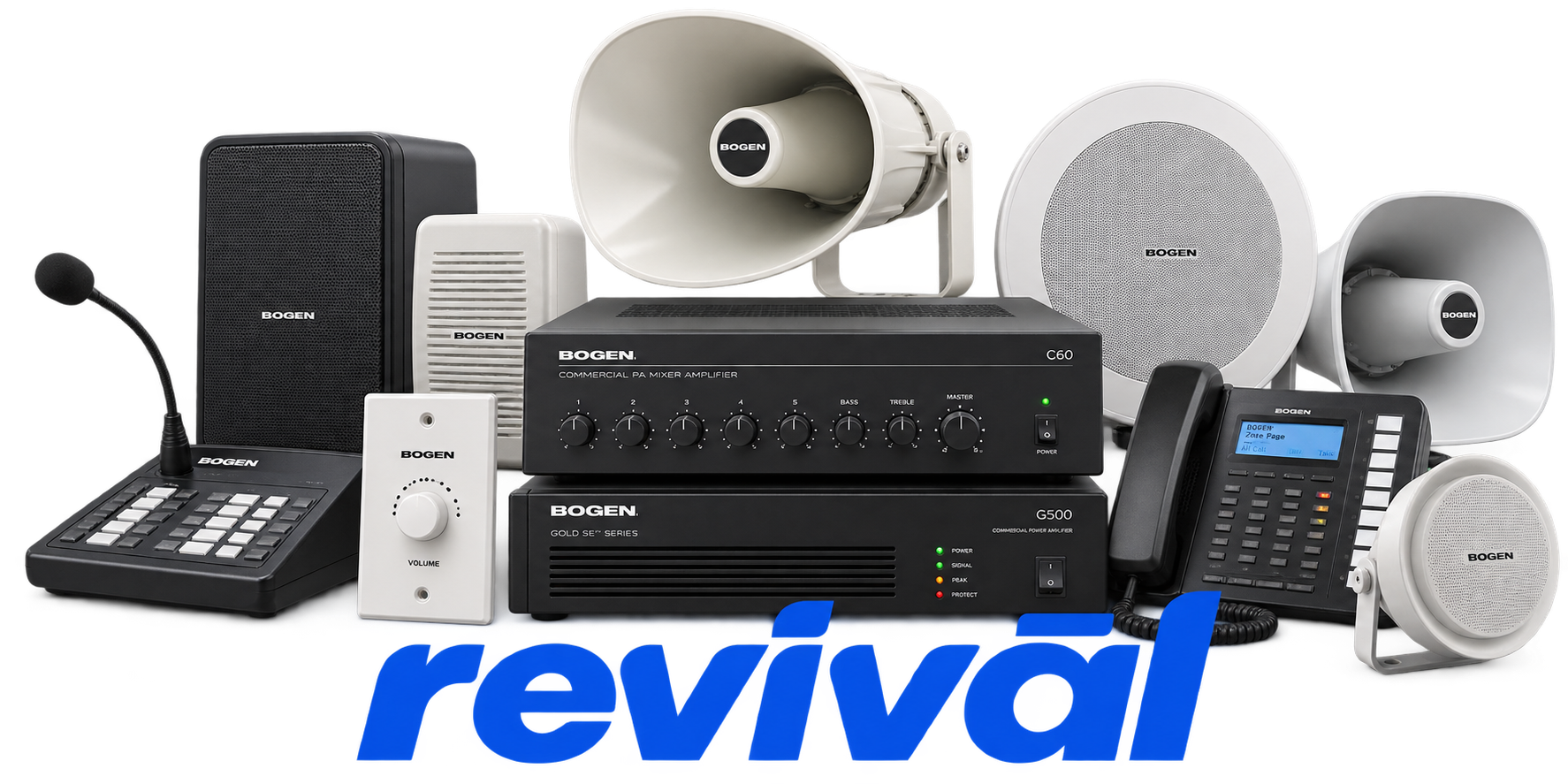
Bogen Communications is a long-established U.S. manufacturer and developer of commercial audio and communications equipment, founded in 1932. Its portfolio centers on public-address and paging systems, IP-based paging/intercom platforms, commercial amplifiers, loudspeakers and horns, microphones, telephone-paging interfaces, school intercom and emergency-notification systems, clocks, and audio-distribution equipment. Its Nyquist platform provides networked IP paging, intercom, messaging, and audio distribution, while its traditional analog products remain widely used in schools, offices, industrial facilities, warehouses, retail environments, hospitality venues, and other commercial sites. Bogen is particularly known for telephone/overhead paging, installed commercial sound, and education-focused intercom and notification systems.
Amplifier powers on but produces no sound from one or all outputs. Common faults include failed output circuitry, improperly seated or defective input modules, broken signal paths, and speaker-output connection failures.
The amplifier, mixer, or paging controller will not power on and its status indicator remains dark. Typical hardware causes include a blown fuse or breaker, failed power-supply circuitry, damaged AC input components, or an internal power-stage fault.
Audio repeatedly cuts out and returns, often with the status or fault indicator cycling. Bogen amplifiers commonly enter protection because of excessive temperature, low load impedance, output shorts, DC faults, or overloaded output stages.
Output becomes harsh, clipped, compressed, or audibly distorted even though audio is still present. Recurring causes include overdriven input stages, excessive gain, overloaded amplifier outputs, failing speaker connections, or incorrect transformer loading.
A continuous hum, buzz, hiss, or other unwanted noise appears in the audio output. Bogen documentation frequently associates this symptom with degraded input connections, grounding faults, shielding problems, EMI pickup, or faults in the input/audio circuitry.
The amplifier becomes abnormally hot and may mute, cycle, or illuminate its fault indicator. Restricted ventilation, overloaded outputs, partial speaker-line shorts, low-impedance loads, or deteriorating power components can push the unit into thermal protection.
The amplifier enters protection or flashes its FAULT indicator because excessive current is being drawn from the output stage. Common causes include shorted speaker lines, transformer/load faults, impedance below the amplifier's rating, or a damaged power-output section.
Telephone or microphone paging fails to activate, cuts off the beginning of announcements, becomes choppy, or mutes background music unexpectedly. Recurring problem areas include VOX detection circuitry, telephone-input stages, ALC/muting circuits, and associated input controls.
One microphone, AUX, telephone, or modular input stops passing audio while other channels continue operating normally. Likely faults include defective input modules, damaged connectors or channel electronics, failed gain stages, or intermittent module/bus connections.
Connect with a technician.

Orders can typically be cancelled 24 hours prior to shipping
Get a real-time offer. Enter the make and model to begin.
Acme offers several ways to pay your service or repair balance.
Securely powered by 
This service is provided by Community Federal Savings Bank (“CFSB”), member FDIC, for which GoCardless Ltd acts as a third-party servicer.
Payable to ACME REVIVAL INC, write Bogen Communications in memo line, and mail your check to: 191 University Blvd. Suite 340, Denver, CO 80206. Payment are collected every weekday excluding federal holidays.