Single-Side Audio Failure
One earcup stops producing sound, commonly from an open voice coil, broken ultra-fine driver lead, failed solder joint, or internal wiring fault. This is frequently reported on DT 770, DT 880, DT 990 and related models.

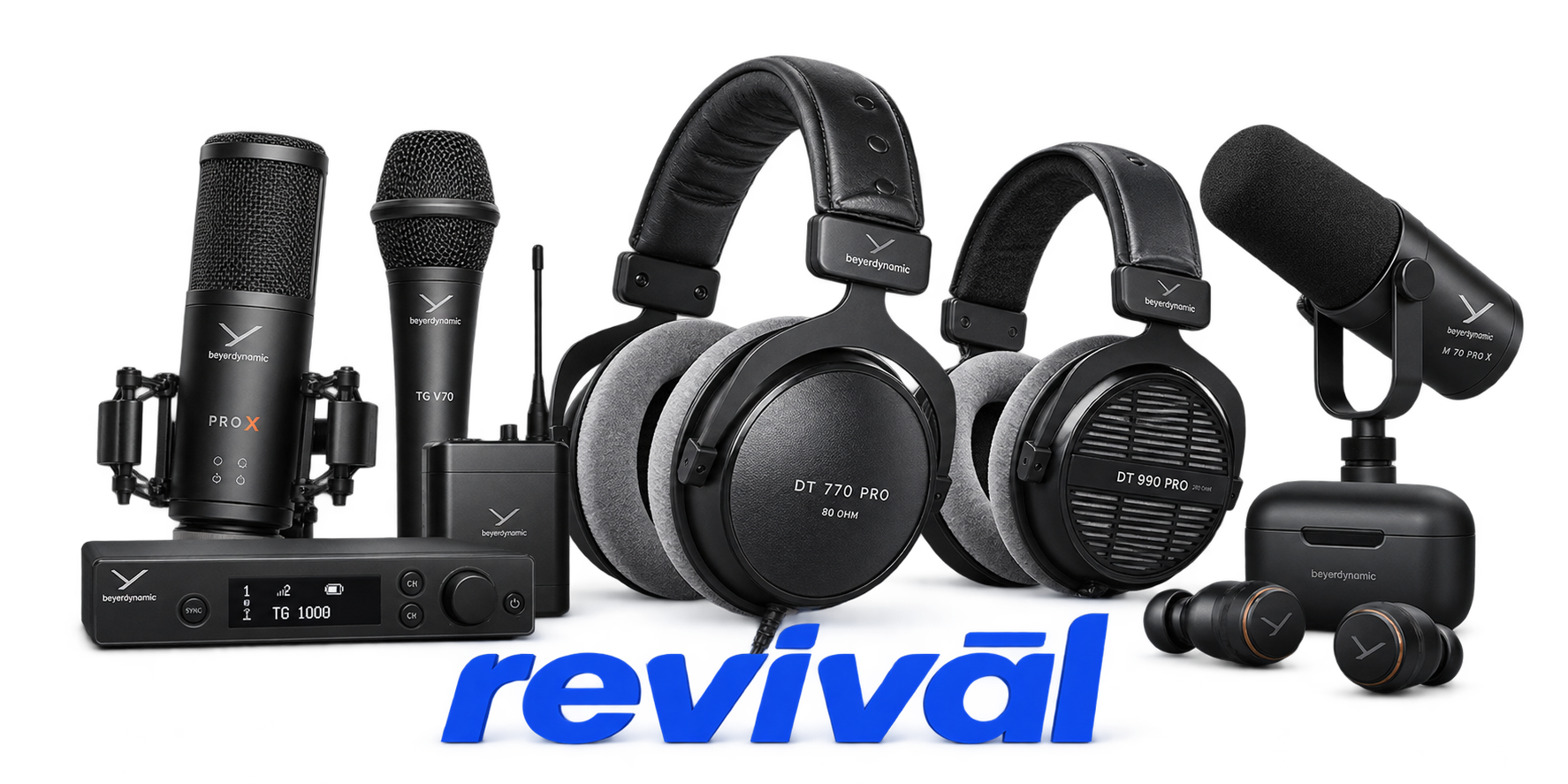
Acme Revival is an independent repair network that operates separately from the manufacturers whose devices we service. Our independence enables a repair model that exists beyond manufacturer-controlled strategies, while preserving the ability to work with manufacturers where appropriate.
beyerdynamic is a German audio-equipment manufacturer founded in 1924 and best known for professional and audiophile headphones, microphones, gaming headsets, and communication audio products. Its products are widely used in recording studios, broadcasting, live production, gaming, and critical listening. The company has a long history of in-house acoustic engineering and German manufacturing, including well-known product families such as the DT 770 PRO, DT 880 PRO, DT 990 PRO, T-series headphones, and M-series microphones. beyerdynamic emphasizes serviceable, long-life construction and continues to manufacture much of its headphone and microphone portfolio largely by hand in Heilbronn.
One earcup stops producing sound, commonly from an open voice coil, broken ultra-fine driver lead, failed solder joint, or internal wiring fault. This is frequently reported on DT 770, DT 880, DT 990 and related models.
Audio becomes intermittent, cuts out when the cable moves, or disappears from one channel because of conductor fatigue, plug damage, strain-relief failure, or a worn earcup socket. Fixed-cable DT models and detachable-cable MMX models both exhibit this failure pattern.
A driver develops buzzing, rattling, or distortion at low frequencies. Hair or debris contacting the diaphragm is particularly common, although damaged diaphragms or misaligned voice coils can produce similar symptoms.
One earcup becomes noticeably louder or quieter than the other even when the source and balance settings are correct. Driver deterioration, diaphragm problems, connection resistance, or mismatched driver performance can cause the imbalance.
Plastic slider, yoke, or hinge components crack and eventually separate, causing the earcup to become loose or detach from the headband. Slider assemblies are a repeatedly reported mechanical weak point on several DT-series generations.
MMX headsets can develop a microphone that cuts out, produces heavy static, or stops transmitting altogether. Common hardware causes include cable faults, loose headset sockets, boom-microphone connections, and failed microphone capsules.
The small conductors carrying audio between the two earcups can fatigue, break, or develop poor solder connections. Symptoms usually include complete loss of one channel or audio that returns when the headband or earcup is moved.
Wireless models may stop powering on, refuse to charge, show no charging LED, or suffer greatly reduced battery runtime. Faults can involve the lithium battery, USB charging circuitry, charging port, or power-management electronics.
True-wireless models can develop a condition where one or both earbuds fail to charge correctly in the case. Dirty, worn, misaligned, or defective charging contacts and case-power faults can leave an earbud completely discharged and unable to start.
Connect with a technician.

Orders can typically be cancelled 24 hours prior to shipping
Get a real-time offer. Enter the make and model to begin.
Acme offers several ways to pay your service or repair balance.
Securely powered by 
This service is provided by Community Federal Savings Bank (“CFSB”), member FDIC, for which GoCardless Ltd acts as a third-party servicer.
Payable to ACME REVIVAL INC, write beyerdynamic in memo line, and mail your check to: 191 University Blvd. Suite 340, Denver, CO 80206. Payment are collected every weekday excluding federal holidays.