Acme Revival is an independent repair network that operates separately from the manufacturers whose devices we service. Our independence enables a repair model that exists beyond manufacturer-controlled strategies, while preserving the ability to work with manufacturers where appropriate.
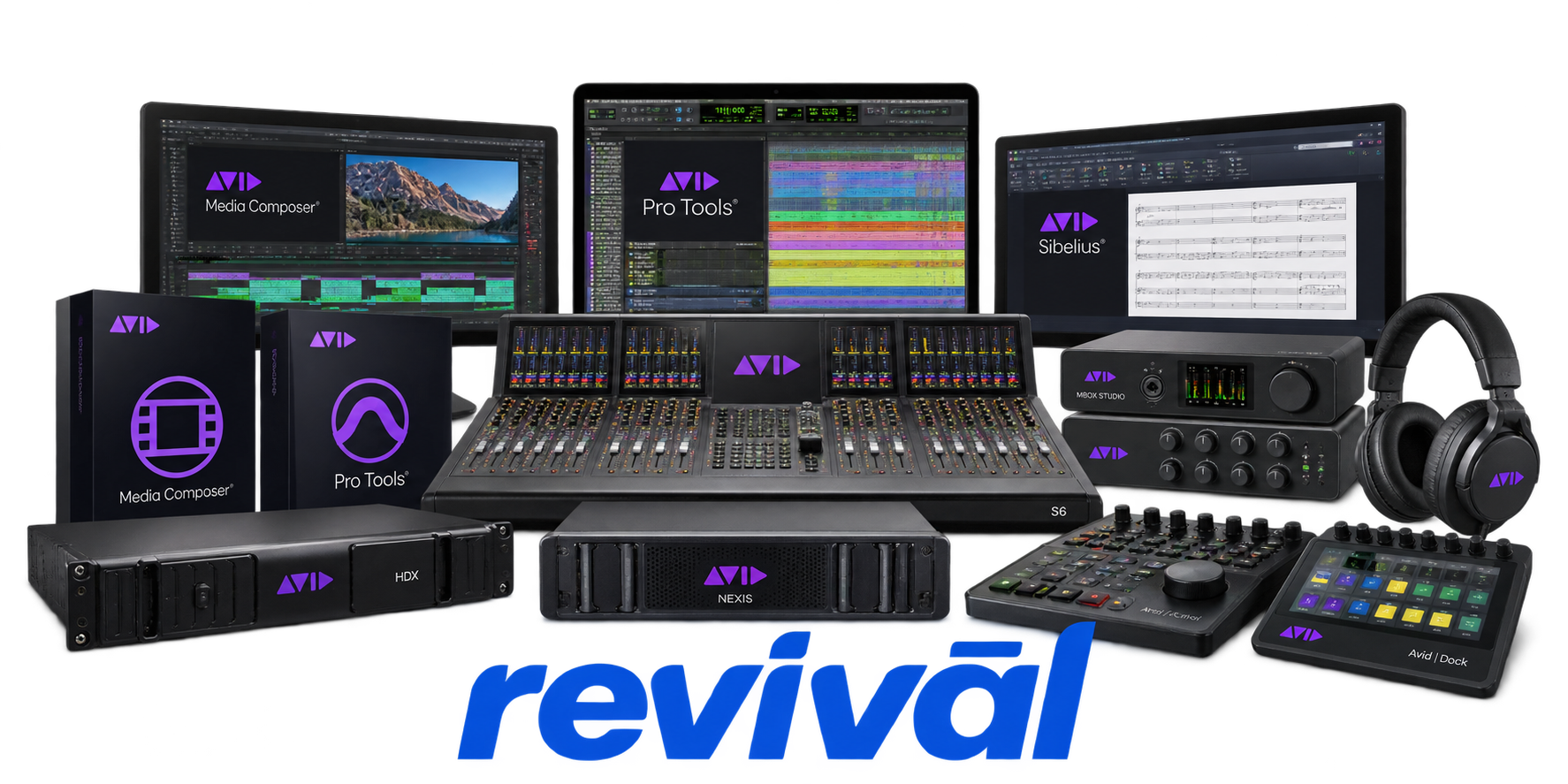
Avid Technology is a professional media-technology manufacturer and software developer best known for tools used in audio production, video editing, broadcast, film, television, music recording, and media-management workflows. Its flagship products include Pro Tools for professional audio recording, editing and mixing; Media Composer for film and television video editing; Sibelius music-notation software; and professional hardware such as Pro Tools audio interfaces and control surfaces, VENUE live-sound systems, and media-storage/workflow infrastructure. Avid serves individual creators as well as recording studios, broadcasters, post-production facilities and large media organizations, combining software, hardware, storage, networking and workflow-management products into integrated production systems. The company is particularly associated with professional film/television editing and studio audio production.
2 Most Seen Failures:
Power Supply Failure
Avid control surfaces, interfaces, and VENUE hardware can develop no-power, intermittent-power, or startup problems caused by failed internal power circuitry, external adapters, capacitors, or inductors. Artist Mix units in particular have documented cases of internal power-component failure.
Motorized Fader Failure
Motorized faders on Artist Mix, S3, S6, 003, and similar Avid control surfaces may stop moving, move erratically, jump to incorrect positions, or report values opposite to physical movement. Wear in the fader motor, position sensor, conductive track, or associated driver circuitry is a common cause.
OLED/LCD Display Failure
Displays on Artist Mix, Eleven Rack, and other Avid hardware may become blank, dim, distorted, partially unreadable, or freeze during operation. Failures can originate in the OLED/LCD module, its power supply, ribbon connections, or display-control circuitry.
USB/FireWire Communication Failure
Mbox, Eleven Rack, 002/003, Fast Track, and other Avid interfaces may disconnect, fail to enumerate, or lose audio communication with the host computer. Besides software compatibility, damaged USB/FireWire ports, interface-controller ICs, connectors, and supporting circuitry can cause persistent hardware-side failures.
Ethernet/EUCON Interface Failure
Artist Series, S3, S6, and other EUCON surfaces can stop appearing on the network even when cables and network configuration are correct. Failed Ethernet jacks, PHY/controller chips, or related board circuitry can prevent link establishment or cause repeated communication loss.
Audio Input or Output Failure
Avid interfaces such as Mbox, HD I/O, HD OMNI, 003, and Eleven Rack can develop dead, distorted, noisy, or intermittent analog channels. Common hardware causes include failed op-amps, converters, relays, capacitors, connectors, or analog power-supply rails.
Microphone Preamp or Phantom-Power Failure
Mbox and other Avid interfaces with microphone inputs may lose gain, become noisy, or stop supplying the required 48-volt phantom power. Faults commonly involve the phantom-power converter, switching components, input protection circuitry, or preamp electronics.
Boot or Initialization Failure
Eleven Rack, VENUE systems, S3-family hardware, and other digitally controlled Avid products may freeze at the startup screen, repeatedly reboot, or fail to complete initialization. Firmware corruption can produce similar symptoms, but failed memory, power rails, processors, or supporting digital circuitry can also cause the fault.
Rotary Encoder, Button, and Control Failure
Frequently used encoders, switches, and buttons on Avid control surfaces and rack hardware can become intermittent, unresponsive, or produce erratic parameter changes. Mechanical wear, contaminated contacts, damaged encoder elements, or failures in the control-scanning circuitry are typical causes.