Fan Motor Bearing Wear
Austin Air purifiers can develop rattling, grinding, squealing, or vibration as the continuously running fan motor bearings wear. Owner reports specifically describe bearing-related rattles in HealthMate and Junior-size units.

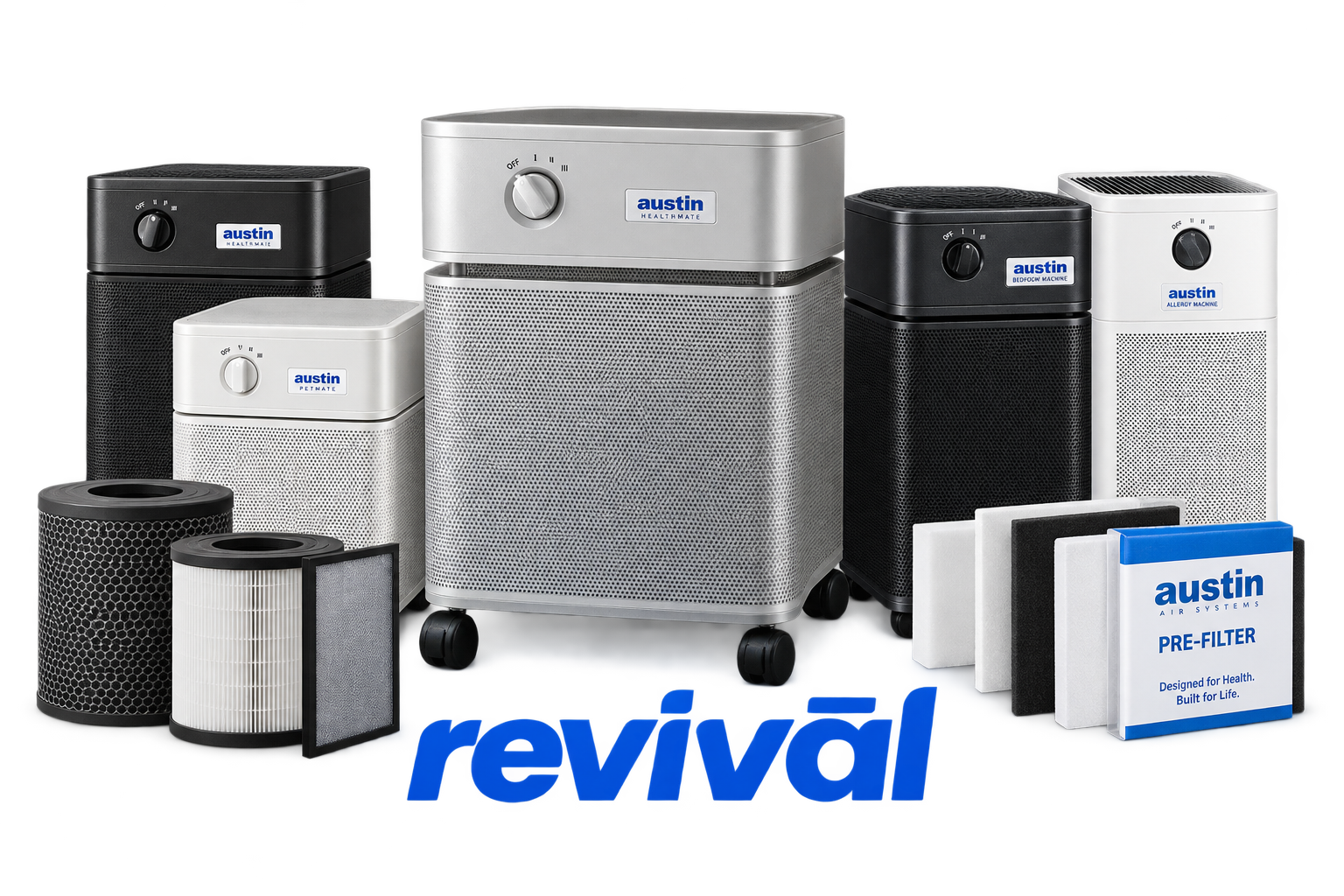
Acme Revival is an independent repair network that operates separately from the manufacturers whose devices we service. Our independence enables a repair model that exists beyond manufacturer-controlled strategies, while preserving the ability to work with manufacturers where appropriate.
Austin Air Systems is a U.S. manufacturer specializing in portable, high-capacity indoor air purification systems for residential, commercial, healthcare, educational, emergency-response, and institutional environments. Founded in Buffalo in 1990, the company is best known for durable steel air cleaners that combine medical-grade HEPA filtration with activated carbon and other adsorbent media to remove airborne particles, allergens, smoke, odors, chemicals, and VOCs. Austin Air manufactures its units and replacement filters in Buffalo and sells its products internationally, with a particular reputation for long filter life, substantial carbon-media capacity, and applications involving asthma, allergies, wildfire smoke, chemical sensitivities, and general indoor-air-quality control.
Austin Air purifiers can develop rattling, grinding, squealing, or vibration as the continuously running fan motor bearings wear. Owner reports specifically describe bearing-related rattles in HealthMate and Junior-size units.
The centrifugal fan motor may eventually fail to start, run intermittently, overheat, or stop completely after extended service. Austin Air uses high-RPM motors intended for continuous operation, making the motor one of the principal electromechanical wear components.
A fan wheel that becomes misaligned, damaged, or mechanically unbalanced can cause pronounced vibration and rattling through the steel enclosure. Similar complaints are reported by Austin Air owners describing units that rattle or sound mechanically out of true.
The three-speed mechanical selector switch can develop worn or contaminated contacts, causing one or more fan speeds to stop working, operate intermittently, or require manipulation of the control knob. Because Austin Air units use a straightforward multi-speed fan control, the switch is a common electrical troubleshooting point as units age.
Accumulated particulate loading in the pre-filter and HEPA media gradually increases airflow restriction, resulting in noticeably weaker output and reduced purification performance. Austin Air recommends monthly vacuuming of the exterior intake screen and designs its main filters for replacement after roughly five years under normal residential conditions.
Activated-carbon media can eventually become saturated and begin allowing odors or VOCs through, and some users report the filter itself producing stale, charcoal-like, vinegar-like, or other noticeable odors. This commonly signals exhausted, contaminated, or otherwise problematic adsorption media requiring filter replacement.
Heavy chemical, smoke, cooking, or VOC exposure can exhaust the carbon section well before the nominal five-year filter interval. Users commonly describe normal particle airflow remaining while odor or VOC-removal performance deteriorates significantly.
The plastic caster wheels used on floor-standing Austin Air models can crack, loosen, or break, particularly during shipping or repeated movement of the relatively heavy purifier. Austin Air customer reviews specifically document cracked wheels on otherwise functional units.
Vibration, transportation, and long-term operation can loosen motor, switch, power-cord, or terminal connections, producing intermittent operation, speed loss, buzzing, or a completely dead unit. These connections are among the primary service points when the simple fan-and-switch electrical system stops operating normally.
Connect with a technician.

Orders can typically be cancelled 24 hours prior to shipping
Get a real-time offer. Enter the make and model to begin.
Acme offers several ways to pay your service or repair balance.
Securely powered by 
This service is provided by Community Federal Savings Bank (“CFSB”), member FDIC, for which GoCardless Ltd acts as a third-party servicer.
Payable to ACME REVIVAL INC, write Austin Air in memo line, and mail your check to: 191 University Blvd. Suite 340, Denver, CO 80206. Payment are collected every weekday excluding federal holidays.