[No Audio Output]
Unit powers on but produces no sound on one or more channels. Common causes include failed/incorrect signal input, muted DSP outputs, speaker connection faults, blown fuses, or an internal amplifier fault.

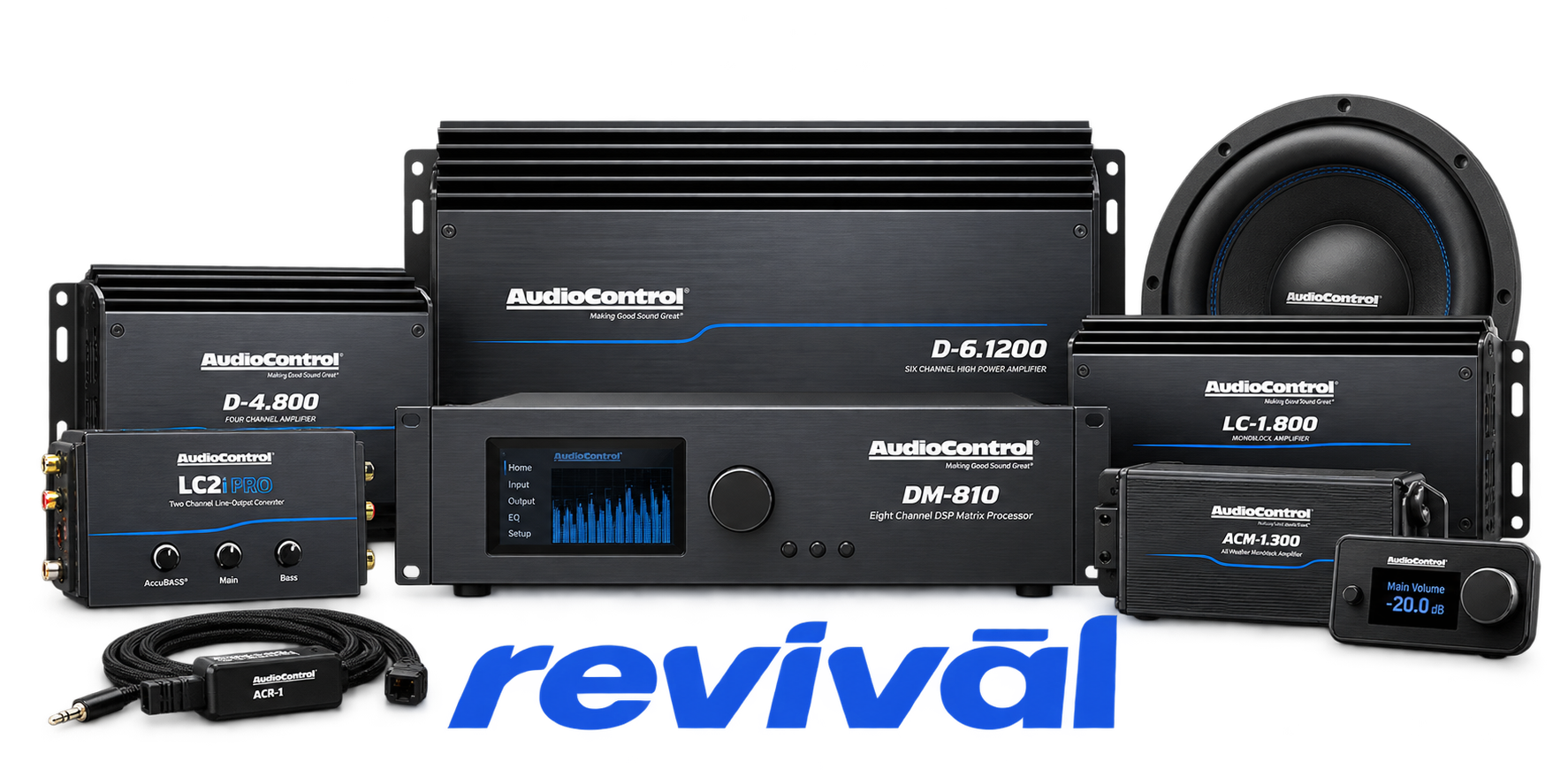
Acme Revival is an independent repair network that operates separately from the manufacturers whose devices we service. Our independence enables a repair model that exists beyond manufacturer-controlled strategies, while preserving the ability to work with manufacturers where appropriate.
AudioControl, Inc. is a U.S. designer and manufacturer of high-performance audio electronics founded in 1977. The company develops products for automotive, residential/home-theater, distributed-audio, and professional/commercial audio applications, including power and multichannel amplifiers, digital signal processors (DSPs), audio processors, receivers/processors, signal extenders, and related integration products. AudioControl has built its reputation around premium sound processing, amplification, OEM-integration solutions for vehicle audio systems, and U.S.-based engineering and manufacturing. Its products are particularly associated with aftermarket car-audio installations and professionally installed home-theater/distributed-audio systems.
Unit powers on but produces no sound on one or more channels. Common causes include failed/incorrect signal input, muted DSP outputs, speaker connection faults, blown fuses, or an internal amplifier fault.
Amplifier enters protection mode and stops producing audio. Documented triggers include speaker shorts, DC offset, abnormal supply voltage, excessive temperature, and internal hardware faults.
Amplifier becomes excessively hot and shuts down or intermittently enters protection. Restricted ventilation, sustained high output, excessive load, or thermal faults can trigger the condition.
One or more speaker channels intermittently lose output, particularly at higher volume levels. Low speaker impedance, shorted wiring, excessive load, or amplifier protection can cause the symptom.
Audio becomes distorted, harsh, buzzing, or crackling as volume increases. Excessive input level, EQ/bass boost, improper gain structure, or an overdriven output stage are common causes.
DSP-equipped models may stop communicating with the AudioControl configuration software even though the computer detects a connected device. Owner reports include D-series hardware simultaneously losing software connectivity and audio output.
Unit fails to power up normally or unexpectedly loses power. Power wiring, supply-voltage problems, blown fuses, remote-turn-on issues, or an internal power-supply fault can produce this condition.
One channel or group of channels stops producing normal audio while other outputs continue working. Wiring/input faults can mimic the failure, while a fault that remains on the same amplifier channel after connections are swapped points toward the hardware.
Bass output is unexpectedly weak, muddy, or inconsistent despite otherwise functioning hardware. Input signal characteristics, gain configuration, AccuBASS settings, clipping, or incorrect system integration are recurring causes.
Connect with a technician.

Orders can typically be cancelled 24 hours prior to shipping
Get a real-time offer. Enter the make and model to begin.
Acme offers several ways to pay your service or repair balance.
Securely powered by 
This service is provided by Community Federal Savings Bank (“CFSB”), member FDIC, for which GoCardless Ltd acts as a third-party servicer.
Payable to ACME REVIVAL INC, write AudioControl in memo line, and mail your check to: 191 University Blvd. Suite 340, Denver, CO 80206. Payment are collected every weekday excluding federal holidays.