No Power / Blown Thermal Fuse
Unit is completely dead with no indicator lights, display, or heating despite a known-good outlet. A failed thermal cutoff, damaged power connection, wiring fault, or power-board failure is commonly responsible.

Acme Revival is an independent repair network that operates separately from the manufacturers whose devices we service. Our independence enables a repair model that exists beyond manufacturer-controlled strategies, while preserving the ability to work with manufacturers where appropriate.
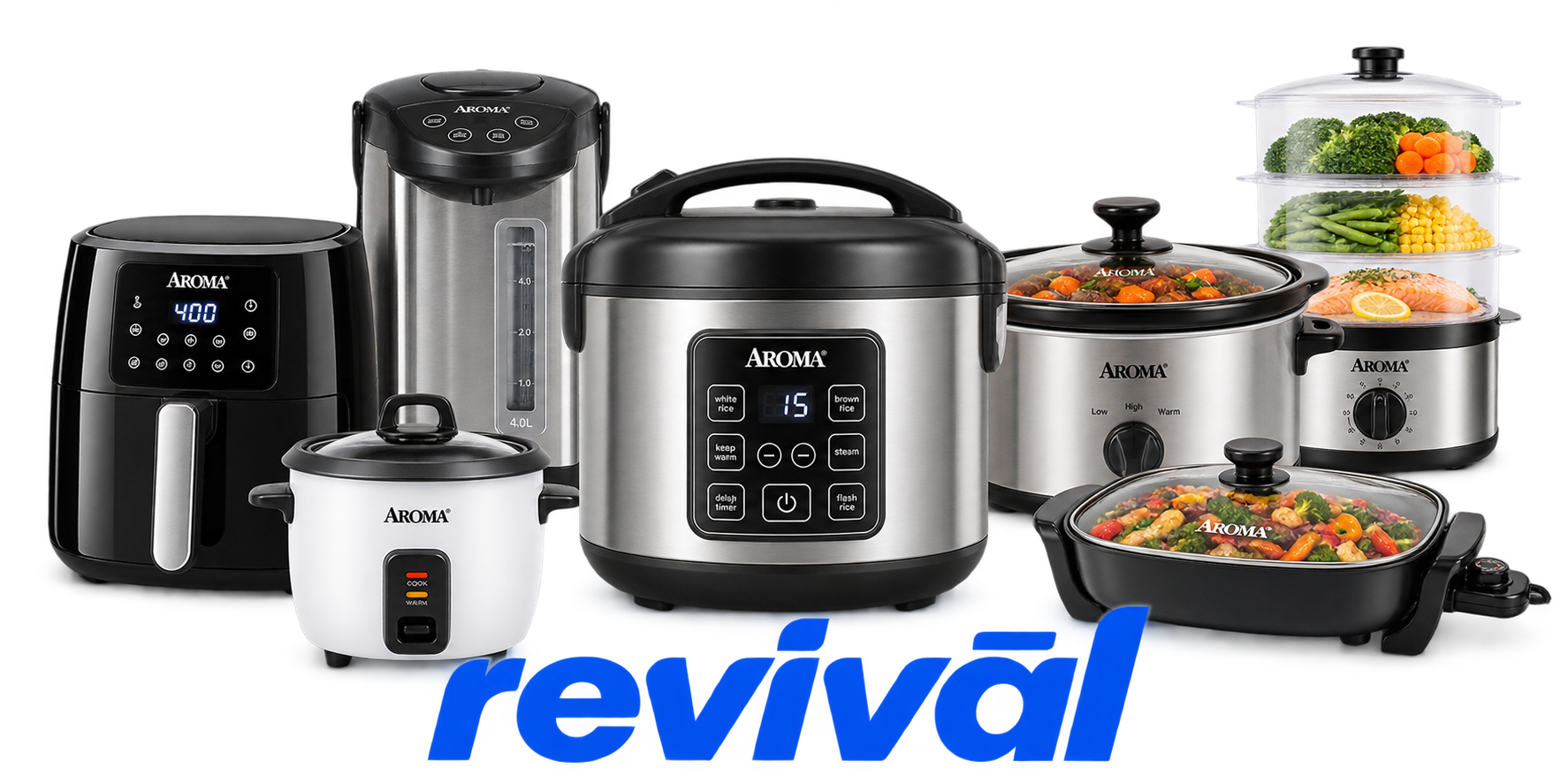
Aroma Housewares Co. is a privately held American small-appliance company founded in Southern California in 1977 and headquartered in San Diego. It is particularly associated with rice cookers and describes itself as the leading U.S. rice-cooker brand; its broader portfolio includes multicookers and other countertop cooking appliances. Over its history, Aroma has marketed rice and grain cookers, food steamers, electric kettles, hot pots, induction cooktops, electric woks, slow and pressure cookers, countertop ovens, dehydrators, coffee appliances, cookware and related kitchen products. Its business model combines U.S.-based product development/branding with manufacturing sourced from multiple appliance factories in Guangdong, China, particularly within the Pearl River Delta appliance-manufacturing region.
Unit is completely dead with no indicator lights, display, or heating despite a known-good outlet. A failed thermal cutoff, damaged power connection, wiring fault, or power-board failure is commonly responsible.
Cooker powers on but produces little or no heat, causing rice to remain uncooked or cooking cycles to run abnormally long. Heating-plate element failure, damaged wiring, or poor electrical contact between the heater circuit and control system are typical causes.
The cooker displays sensor-related error codes or heats and cycles incorrectly because the upper or lower temperature sensor has failed open, shorted, or drifted out of specification. Aroma manuals document multiple top- and bottom-sensor fault codes across digital models.
Digital models may become unresponsive, display errors, fail to initiate cooking, or behave erratically when the main control PCB develops a fault. Some Aroma induction models specifically identify control-board damage and control-board sensor faults in their error-code diagnostics.
The cooker stops cooking, switches modes unexpectedly, or reports an over-temperature error. Failed temperature regulation, inadequate heat transfer, sensor problems, or abnormal heating conditions can trigger the unit's overheat protection.
Steam or water escapes around the lid, reducing cooking efficiency and sometimes leaving food undercooked. Worn or displaced seals, lid misalignment, contamination around the sealing surfaces, or a blocked steam path are common causes.
Water, foam, or starchy liquid boils out through the steam vent or lid area. Starch buildup and a restricted steam vent are common contributors, although excessive water or unrinsed rice can produce the same symptom.
The appliance will not remain in Cook mode, switches to Keep Warm prematurely, or fails to transition correctly after cooking. Faults in the temperature-sensing circuit, mechanical switching mechanism, thermostat, or electronic control system can cause improper cycling.
The display may be blank, frozen, intermittent, or show persistent communication-related error codes even though power reaches the appliance. Digital and induction Aroma models can develop display/control interconnect, PCB, sensor-interface, or internal communication faults.
Connect with a technician.

Orders can typically be cancelled 24 hours prior to shipping
Get a real-time offer. Enter the make and model to begin.
Acme offers several ways to pay your service or repair balance.
Securely powered by 
This service is provided by Community Federal Savings Bank (“CFSB”), member FDIC, for which GoCardless Ltd acts as a third-party servicer.
Payable to ACME REVIVAL INC, write Aroma in memo line, and mail your check to: 191 University Blvd. Suite 340, Denver, CO 80206. Payment are collected every weekday excluding federal holidays.