
Arduino

Repair, Service, and Parts

Arduino repair, service, and parts

Acme Revival is an independent repair network that operates separately from the manufacturers whose devices we service. Our independence enables a repair model that exists beyond manufacturer-controlled strategies, while preserving the ability to work with manufacturers where appropriate.

Mogliano Veneto, Province of Treviso, Italy
Manuf. Location
≈ US $30.9M
Annual Revenue (est)
Embedded Development
End Use Segment

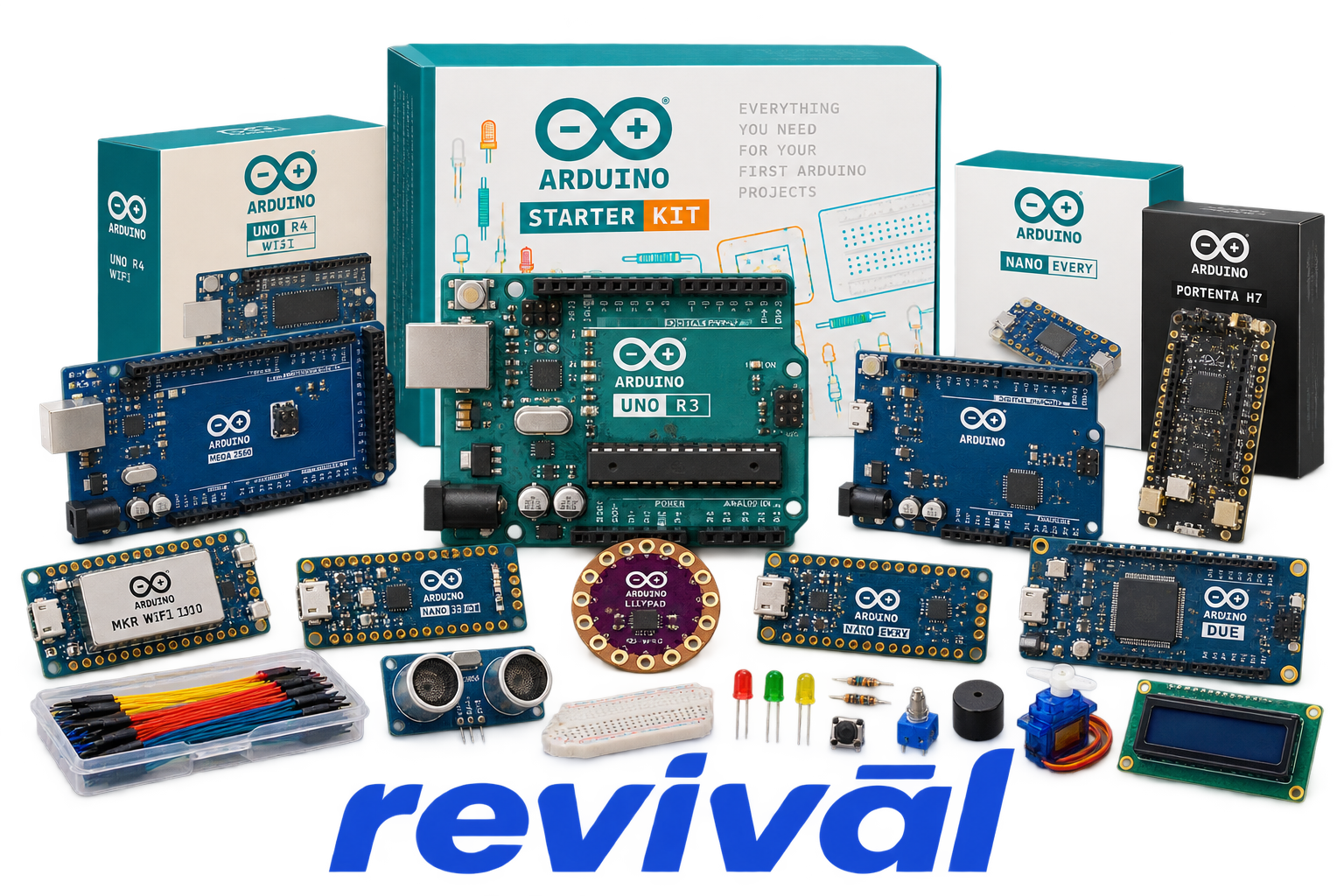
Arduino is an Italian electronics and software OEM best known for its open-source microcontroller development platform and the iconic Arduino UNO family. The company designs and manufactures programmable development boards, embedded computing modules, sensor platforms, robotics hardware, educational kits, industrial controllers and IoT/edge-computing products, alongside the Arduino IDE, libraries and Arduino Cloud ecosystem. Its hardware portfolio spans entry-level maker and education products through Nano, UNO, MKR and Mega boards to professional Portenta, Nicla and Opta platforms for industrial automation, machine learning, robotics and connected-device development. Arduino is particularly known for making embedded electronics and physical computing accessible through standardized hardware, straightforward programming tools, extensive documentation and a very large open-source developer community.

2 Most Seen Failures:

USB Port / Connector Failure

The USB connector becomes loose, cracked, detached from the PCB, or develops damaged solder joints, causing intermittent power, data loss, or complete failure to connect to a computer. Small surface-mount Micro-USB connectors on Nano, MKR, Yún, Leonardo-family and similar boards are particularly vulnerable to mechanical stress.


USB-to-Serial Interface Failure

The USB-to-serial circuitry fails, leaving the board powered but undetected or appearing as an unknown/DFU device. On UNO R3 and Mega boards this commonly involves the ATmega16U2/8U2 interface or its firmware, while classic Nano boards can experience FTDI/interface failures.

Corrupted or Missing Bootloader

The board powers up but cannot reliably accept sketches, repeatedly produces upload errors, or disappears from its expected programming port. Bootloader corruption can follow improper programming, unsafe code, power problems, or shorts and often requires reburning the bootloader with an ISP/JTAG programmer.

Voltage Regulator / Power Circuit Failure

The onboard regulator overheats or fails after excessive input voltage, excessive peripheral current, reverse-polarity events, or sustained thermal stress. Typical symptoms include a dead board, unstable 5 V/3.3 V rails, excessive regulator temperature, or operation from USB but not from VIN/barrel-jack power.

Microcontroller I/O Pin Damage

GPIO, analog, PWM, or communication pins stop functioning after overvoltage, excessive source/sink current, shorts, inductive loads, or signals applied outside the MCU supply rails. Damage may affect only individual pins while the rest of the ATmega, SAMD, Renesas, nRF52, RP2040, or other main processor continues operating.

Intermittent Reset / Boot Loop

The board continuously resets, freezes, or restarts unpredictably instead of running its sketch normally. Common causes include inadequate power, voltage sag from attached motors or peripherals, watchdog-reset problems, external RESET-line interference, shorts, or damaged power circuitry.

Wi-Fi / Bluetooth Connectivity Failure

Wireless-equipped boards can lose Wi-Fi or Bluetooth functionality, fail to associate with networks, or report communication errors with their connectivity module. NINA-W102, ESP32-S3 and related modules are especially susceptible to outdated/corrupted connectivity firmware, firmware-library mismatches, and insufficient power.

Damaged Headers / Solder Joints

Repeated insertion, mechanical loading, poor connections, or accidental stress can crack solder joints around pin headers, power connectors, USB connectors, or other board-mounted components. The result is typically intermittent GPIO, power, serial, I2C, SPI, or peripheral operation that changes when the board or connector is moved.

Main MCU / Board Electrical Failure

Overvoltage, reversed connections, shorts, electrostatic discharge, excessive GPIO current, or incorrectly powered external circuitry can permanently damage the main microcontroller or surrounding PCB circuitry. The board may remain completely dead, draw abnormal current, become unusually hot, fail programming even with a known-good interface, or exhibit multiple nonfunctional peripherals.

1 Acme Revival offers repair, service, and part rebuild opportunities for most Arduino devices.

Connect with a technician.

  1. 1 Repairs are performed on a best-effort basis. Acme Revival utilizes a network of sophisticated technicians and engineers with diverse service offerings; despite this, factors that influence the repair outcome may ultimately prove unsuccessful. Acme Revival makes no claim that it can, guarantee a repair before your device is sent in for diagnostic evaluation; even then, repair and diagnostic work are not mutually exclusive. Despite well-intentioned quoting, repairs may still prove unsuccessful.
  2. 2 Per information known, researched and collected by Acme Revival and its systems at time of page publishing (September 17, 2026).
  3. *Information regarding this manufacturer/brand/organization is estimated with information collected and known to Acme Revival. This information is intended to provide insights into the spotlight entity, however may not be accurate— information is strictly of estimate nature only.
  4. **The model list shown here may not be an all-inclusive list of the EcoFlow product range. Model list has been derived per information known, researched and collected by Acme Revival and its systems for the US market.