SSD Not Detected
The SSD disappears from BIOS or the operating system, either intermittently or permanently. Common causes include controller failure, corrupted firmware/FTL metadata, NAND faults, or interface-related failure.

Acme Revival is an independent repair network that operates separately from the manufacturers whose devices we service. Our independence enables a repair model that exists beyond manufacturer-controlled strategies, while preserving the ability to work with manufacturers where appropriate.
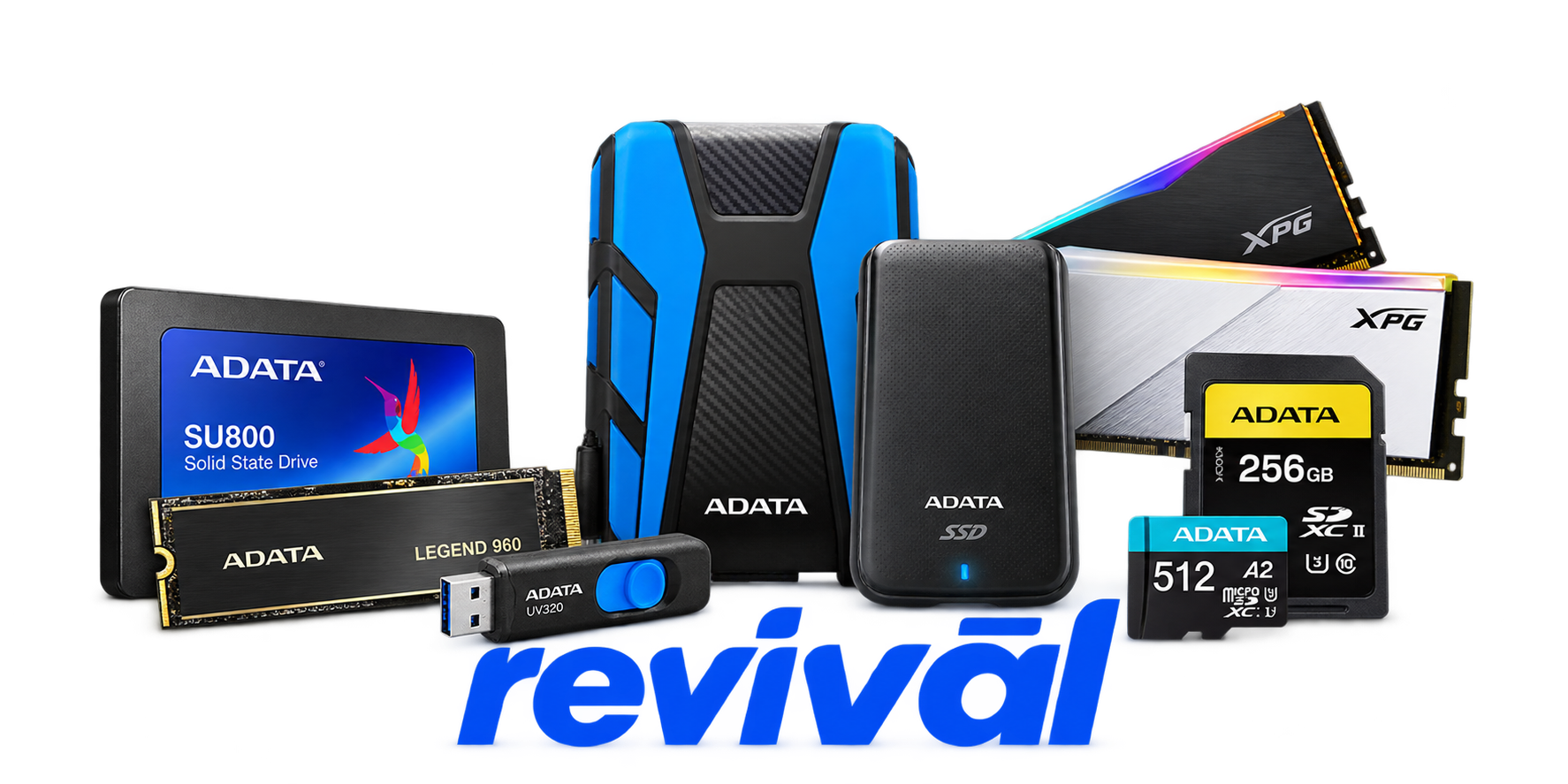
ADATA Technology Co., Ltd. is a Taiwanese computer-memory and data-storage manufacturer founded in 2001. The company designs, manufactures, and markets DRAM memory modules, solid-state drives (SSDs), USB flash drives, memory cards, external storage devices, embedded storage, and related computer and mobile peripherals. Its products serve consumer PCs, gaming systems, workstations, servers, industrial computers, embedded systems, edge/AI applications, and enterprise infrastructure. ADATA is particularly known for DRAM modules and branded SSDs, and describes itself as the world's second-largest manufacturer of DRAM and branded SSD modules. In addition to the core ADATA brand, it operates XPG for gaming/performance hardware and TRUSTA for enterprise and AI/data-center storage
The SSD disappears from BIOS or the operating system, either intermittently or permanently. Common causes include controller failure, corrupted firmware/FTL metadata, NAND faults, or interface-related failure.
The SSD firmware or flash translation layer becomes corrupted, causing startup hangs, incorrect capacity, inaccessible data, or complete loss of drive detection. This is particularly associated with several ADATA SU, LEGEND, and XPG SSD controller platforms.
NAND memory develops worn or unusable blocks after accumulated program/erase cycles or abnormal operating events. Symptoms include read errors, write failures, corrupted files, declining performance, and eventual drive failure.
The drive remains readable but refuses new writes, deletions, formatting, or other modifications. Firmware safeguards, excessive NAND errors, or controller problems can force the SSD into this state.
The SSD unexpectedly drops offline during boot, file transfers, or normal operation and may reappear after a reboot or complete power cycle. Firmware instability, controller faults, overheating, power issues, or deteriorating NAND can cause this behavior.
The storage controller stops communicating correctly with the NAND and host system. The drive may become completely dead, remain permanently busy, disappear from BIOS, or identify with an incorrect name or capacity.
The SSD becomes excessively hot under sustained workloads, leading to throttling, instability, disconnects, freezes, or crashes. High-performance XPG NVMe models are particularly dependent on adequate thermal management.
Stored data develops bit errors that the SSD's error-correction system can no longer recover. This can produce unreadable files, I/O errors, corrupted data, bad blocks, and eventually an inaccessible drive.
Unexpected power interruption or failure of the SSD's onboard power circuitry prevents normal controller and NAND initialization. The result may be firmware corruption, a permanently busy drive, zero-capacity reporting, or complete failure to detect.
Connect with a technician.

Orders can typically be cancelled 24 hours prior to shipping
Get a real-time offer. Enter the make and model to begin.
Acme offers several ways to pay your service or repair balance.
Securely powered by 
This service is provided by Community Federal Savings Bank (“CFSB”), member FDIC, for which GoCardless Ltd acts as a third-party servicer.
Payable to ACME REVIVAL INC, write ADATA in memo line, and mail your check to: 191 University Blvd. Suite 340, Denver, CO 80206. Payment are collected every weekday excluding federal holidays.